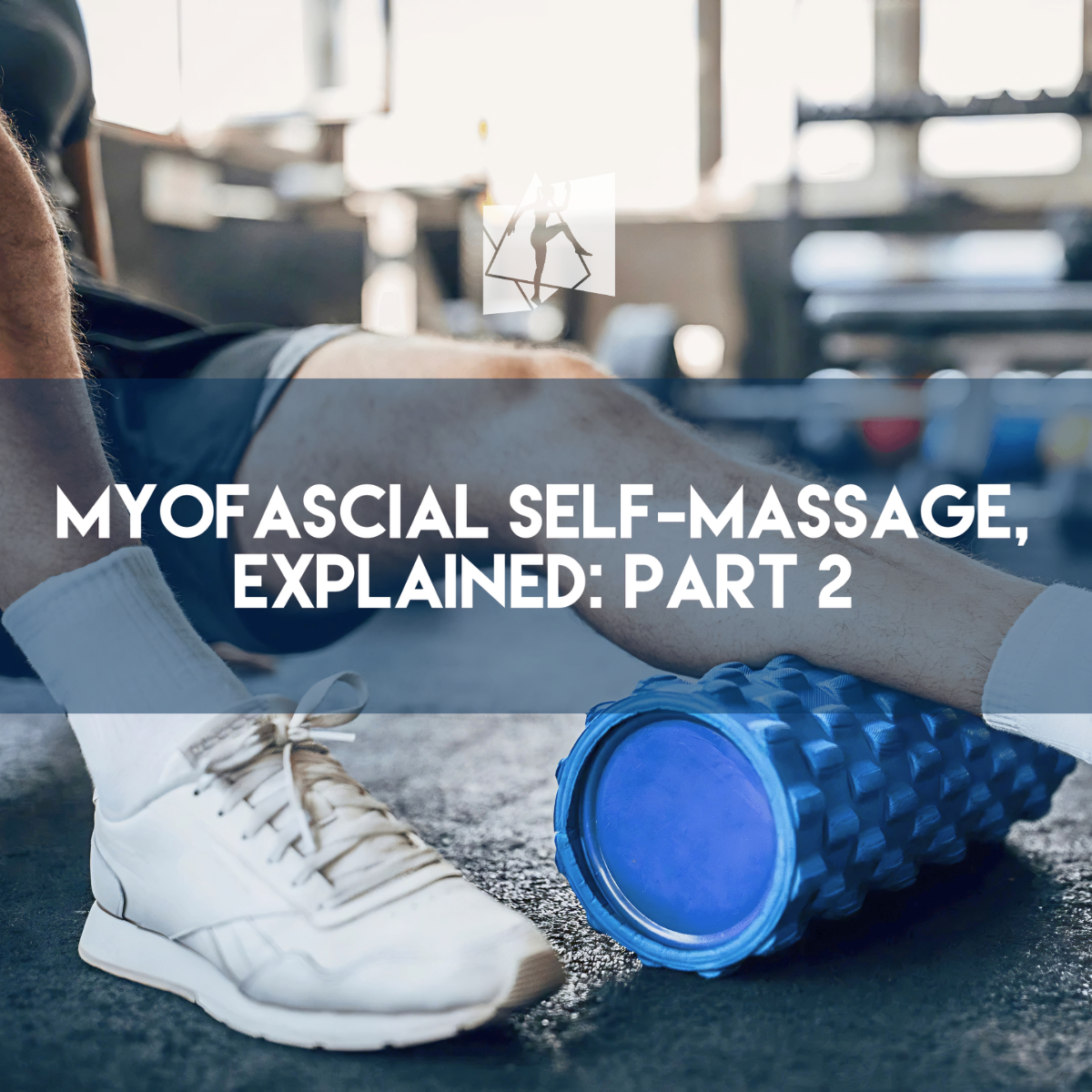
Foam rolling is one of the most used—and most misused—recovery tools. If you have ever thought: "Am I even doing this right?" You are not alone. Here is how to actually use foam rolling as a tool that works.
When to Foam Roll
Before Training (Best for Mobility)
Use it to reduce stiffness, improve movement quality, and prep your body for training.
How:
90 seconds per muscle (minimum)
Slow, controlled (2-4 seconds per roll)
Moderate pressure
Research shows 30 seconds isn't enough to improve range of motion—you need at least 90 seconds to see real changes. [6]
Important: Keep pre-workout rolling brief (1-2 minutes per area max). One study found that 5 minutes of foam rolling before exercise decreased vertical jump performance by 5.1%. [7] If power output matters for your workout, keep it short and follow it immediately with a dynamic warm-up.
After Training (Best for Recovery)
This is where foam rolling really shines. It helps reduce soreness (studies show ~6% improvement in pain perception), speed up recovery, and restore movement. [10]
How:
2-3 minutes per major area
15-20 minutes total
Focus on what you trained
Studies show foam rolling for at least 120 seconds produces significantly better recovery outcomes than shorter durations. [8]
Even better: pair it with light movement (walking, easy cycling) to boost circulation
On Recovery Days (Best for Flexibility)
This is your chance to go deeper.
Best combo:
Foam roll (2-3 minutes per area)
Then hold a stretch (30-60 seconds)
Research shows foam rolling and stretching produce similar flexibility gains when done separately. Combining them may improve performance more than stretching alone, though the range of motion benefits aren't additive. [5]
Key insight: Programs longer than 4 weeks produce significantly better flexibility gains than shorter programs. [5] This is a long game. Consistency over weeks is where real mobility gains happen
How to foam roll
Go slower than you think
Fast rolling = low impact
Slow rolling = real change
Research recommends 2-4 seconds per roll (time for a single pass in one direction). [2]
Sit on tight spots
When you find a tender area:
Pause for 5-10 seconds
Breathe
Let the tension drop
Use moderate pressure
Aim for: 6-7/10 discomfort
Not pain. Not nothing. Right in the middle.
Interestingly, research shows pressure level doesn't significantly affect range of motion outcomes—so don't feel like you need to crush yourself. Moderate pressure works. [3]
Stay long enough
Minimum: 90-120 seconds per area
This is the most common mistake. Studies show 30 seconds produces no significant improvement in range of motion, while 90+ seconds does. [6]
You can break this up: 3 sets of 30 seconds works just as well as one continuous session. [2]
What to Combine with foam rolling
#1 Best Combo: Foam Rolling + Light Movement
Walking, easy cycling, or low-effort movement improves circulation and speeds recovery.
Best for Flexibility: Rolling + Stretching
Roll first → then stretch
You may get more range with less resistance [4]
Simple Weekly Plan
✔ Before workouts: 90 seconds per target area (keep it brief if power matters)
✔ After workouts: 15-20 minute recovery session
✔ Recovery days: full body + stretching
✔ Daily minimum: 10 minutes
Consistency > duration
Keep Your Expectations Realistic
The research shows foam rolling works, but the effects are modest—not miraculous.
What you can expect:
Small improvements in sprint performance (~0.7% pre-exercise) [10]
Moderate improvements in flexibility (~4%) [11]
Reduced muscle soreness (~6% improvement) [10]
Minimal impact on strength or power (which is good—it won't hurt performance if kept brief) [2]
Meta-analysis suggests foam rolling may be slightly more effective as a warm-up activity than a recovery tool, though both applications have benefits. [10]
The Biggest Mistakes
❌ Rolling too fast — You need 2-4 seconds per pass
❌ Not spending enough time — 30 seconds doesn't work; 90+ seconds does
❌ Avoiding uncomfortable areas — That's usually where you need it most
❌ Only doing it when you're already sore — Consistent use prevents problems
The Bottom Line
Foam rolling works—but only if you use it correctly.
Keep it simple:
Slow: 2-4 seconds per roll
Long enough: 90-120 seconds per area minimum
Consistent: Regular use beats occasional long sessions
The effects are real but modest... Do that, and your body will feel the difference.
You now know when to roll and for how long. But which tool should you actually use? Part 3 breaks down the best self-massage tools and when each one works best.
While self-massage is a great place to start, sometimes your body needs a more personalized approach. Working 1-on-1 with a certified massage therapists can help you target what your body actually needs and get better results.
References
Arbiza, B. C., et al. (2024). Effect of foam rolling recovery on pain and physical capacity after resistance exercises: A randomized crossover trial. Journal of Bodywork and Movement Therapies, 37, 226–232.
Behm, D. G., et al. (2020). Foam rolling prescription: A clinical commentary. Journal of Strength and Conditioning Research, 34(11), 3301–3308.
Hirose, N., et al. (2025). Sex and pressure effects of foam rolling on acute range of motion in the hamstring muscles. PLoS One, 20(2), e0319148.
Konrad, A., et al. (2021). A comparison of the effects of foam rolling and stretching on physical performance: A systematic review and meta-analysis. Frontiers in Physiology, 12, 720531.
Konrad, A., et al. (2022). Foam rolling training effects on range of motion: A systematic review and meta-analysis. Sports Medicine, 52(10), 2523–2535.
Nakamura, M., et al. (2021). The acute and prolonged effects of different durations of foam rolling on range of motion, muscle stiffness, and muscle strength. Journal of Sports Science & Medicine, 20(1), 62–68.
Phillips, J., et al. (2021). Effect of varying self-myofascial release duration on subsequent athletic performance. Journal of Strength and Conditioning Research, 35(3), 746–753.
Schroeder, J., et al. (2021). Effects of foam rolling duration on tissue stiffness and perfusion: A randomized cross-over trial. Journal of Sports Science & Medicine, 20(4), 626–634.
Sulowska-Daszyk, I., & Skiba, A. (2022). The influence of self-myofascial release on muscle flexibility in long-distance runners. International Journal of Environmental Research and Public Health, 19, 457.
Wiewelhove, T., et al. (2019). A meta-analysis of the effects of foam rolling on performance and recovery. Frontiers in Physiology, 10, 376.
Wilke, J., et al. (2020). Acute effects of foam rolling on range of motion in healthy adults: A systematic review with multilevel meta-analysis. Sports Medicine, 50(2), 387–402.