

Physical TheraPT

Movement health

Water Wins

You've probably heard you need to drink lots of water after a massage. But is that really necessary? Let's look at what the science actually says about hydration, massage, and athletic performance.

Why Water Matters for Athletes

Water makes up about 60% of your body weight and plays essential roles in nutrient transport, temperature regulation, and joint lubrication. For athletes and active individuals, staying hydrated is particularly important because it affects how your muscles and tissues function.[1]

When you're dehydrated, your tissues become stiffer and less flexible. Research shows that dehydration increases the force needed to compress soft tissues and reduces tissue thickness. Even mild dehydration (losing just 3% of your body weight in fluids) can decrease muscle endurance by about 8% and reduce strength by about 5%.[2][3]

Dehydration also creates extra stress on your muscles at the cellular level. Studies show that exercising while dehydrated increases oxidative stress and can impair muscle protein metabolism. Over time, severe dehydration may even slow down muscle recovery and glycogen (energy) storage after workouts.[4][5]


The Truth About Massage and "Toxins"

Here's the reality: the idea that massage releases toxins requiring extra water is a myth. There's no scientific evidence supporting this claim.[6][7][8]

Your body already has highly effective systems for removing waste products—your liver, kidneys, and lymphatic system handle this 24/7. Massage doesn't create a sudden release of toxins that needs to be flushed out with water.

What about lactic acid? This is another common misconception. Lactic acid doesn't cause muscle soreness, and it's cleared from your muscles within 30-60 minutes after exercise—long before you'd typically get a massage. Massage doesn't remove lactic acid, and you don't need extra water to flush it out.[9][10][11]

That said, massage does produce real physiological effects. Studies show it can temporarily reduce cortisol (a stress hormone), lower heart rate, and cause modest changes in inflammatory markers. But none of these effects require you to drink extra water.[12][13][14]


How Much Water Do You Actually Need?

For general health, aim for about 40-45 mL per kilogram of body weight per day from all beverages and food combined. For a 150-pound (68 kg) person, that's roughly 2.7-3 liters (90-100 ounces) total per day.[15][16]

If you're training hard or sweating heavily, you'll need more. A good rule of thumb: replace about 1.5 times the fluid you lose during exercise. For example, if you lose 1 pound during a workout, drink about 24 ounces of fluid.[17]

Simple ways to monitor your hydration:

  • Check your urine color—pale yellow is ideal

  • Pay attention to thirst during moderate activity

  • Weigh yourself before and after intense workouts to estimate fluid loss

  • Add 0.5-1 liter of water after high-sweat sessions


Important: Don't overdo it. Drinking excessive plain water during prolonged exercise can dilute your sodium levels and cause problems.


The Bottom Line

Hydration is important for athletic performance and recovery—but not because of massage. Staying well-hydrated helps maintain tissue flexibility, supports muscle function, and enables efficient recovery from training.[2][4][3]

After your next massage, feel free to drink water if you're thirsty. But don't feel pressured to chug extra water based on myths about toxins or lactic acid. Instead, focus on consistent daily hydration as part of your overall training and recovery strategy.

The real reason to stay hydrated isn't about flushing anything out—it's about keeping your body functioning at its best.


References

  1. Water as an Essential Nutrient: The Physiological Basis of Hydration. Jéquier E, Constant F. European Journal of Clinical Nutrition. 2010;64(2):115-23. doi:10.1038/ejcn.2009.111.

  2. Investigating the Impact of Dehydration and Hydration on in-Vivo Hip Soft Tissue Biomechanics. Khorami F, Foroutan Y, Sparrey CJ. PloS One. 2025;20(8):e0328054. doi:10.1371/journal.pone.0328054.

  3. Effect of Hypohydration on Muscle Endurance, Strength, Anaerobic Power and Capacity and Vertical Jumping Ability: A Meta-Analysis. Savoie FA, Kenefick RW, Ely BR, Cheuvront SN, Goulet ED. Sports Medicine (Auckland, N.Z.). 2015;45(8):1207-27. doi:10.1007/s40279-015-0349-0.

  4. Passive Dehydration Increases Oxidative Stress and mTOR Signalling Pathway Activation in Young Men Following Resistance Exercise. Luk HY, Jiwan NC, Appell CR, et al. The Journal of Physiology. 2025;603(12):3551-3570. doi:10.1113/JP288434.

  5. Hydration, Hyperthermia, Glycogen, and Recovery: Crucial Factors in Exercise Performance-a Systematic Review and Meta-Analysis. López-Torres O, Rodríguez-Longobardo C, Escribano-Tabernero R, Fernández-Elías VE. Nutrients. 2023;15(20):4442. doi:10.3390/nu15204442.

  6. Side-Effects of Massage Therapy: A Cross-Sectional Study of 100 Clients. Cambron JA, Dexheimer J, Coe P, Swenson R. Journal of Alternative and Complementary Medicine (New York, N.Y.). 2007;13(8):793-6. doi:10.1089/acm.2006.6401.

  7. The Safety of Massage Therapy. Ernst E. Rheumatology (Oxford, England). 2003;42(9):1101-6. doi:10.1093/rheumatology/keg306.

  8. The Mechanisms of Massage and Effects on Performance, Muscle Recovery and Injury Prevention. Weerapong P, Hume PA, Kolt GS. Sports Medicine (Auckland, N.Z.). 2005;35(3):235-56. doi:10.2165/00007256-200535030-00004.

  9. Delayed Onset Muscle Soreness : Treatment Strategies and Performance Factors. Cheung K, Hume P, Maxwell L. Sports Medicine (Auckland, N.Z.). 2003;33(2):145-64. doi:10.2165/00007256-200333020-00005.

  10. Delayed Muscle Soreness: A Review. Francis K. The Journal of Orthopaedic and Sports Physical Therapy. 1983;5(1):10-3. doi:10.2519/jospt.1983.5.1.10.

  11. Lactate: Friend or Foe. Hall MM, Rajasekaran S, Thomsen TW, Peterson AR. PM & R : The Journal of Injury, Function, and Rehabilitation. 2016;8(3 Suppl):S8-S15. doi:10.1016/j.pmrj.2015.10.018.

  12. Physiological Adjustments to Stress Measures Following Massage Therapy: A Review of the Literature. Moraska A, Pollini RA, Boulanger K, Brooks MZ, Teitlebaum L. Evidence-Based Complementary and Alternative Medicine : eCAM. 2010;7(4):409-18. doi:10.1093/ecam/nen029.

  13. Influence of Classical Massage on Biochemical Markers of Oxidative Stress in Humans: Pilot Study. Skubisz Z, Kupczyk D, Goch A, et al. BioMed Research International. 2021;2021:6647250. doi:10.1155/2021/6647250.

  14. Effect of Single Session of Swedish Massage on Circulating Levels of Interleukin-6 and Insulin-Like Growth Factor 1. Stenbäck V, Lehtonen I, Mäkelä KA, et al. International Journal of Molecular Sciences. 2024;25(17):9135. doi:10.3390/ijms25179135.

  15. Hydration for Health Hypothesis: A Narrative Review of Supporting Evidence. Perrier ET, Armstrong LE, Bottin JH, et al. European Journal of Nutrition. 2021;60(3):1167-1180. doi:10.1007/s00394-020-02296-z.

  16. Hydration and Health at Ages 40-70 Years in Salzburg Austria Is Associated With a Median Total Water Intake Over 40 mL/kg Including at Least 1 L/D Plain Drinking Water. Stookey JD, Langthaler PB, Felder TK, et al. Frontiers in Public Health. 2025;13:1668981. doi:10.3389/fpubh.2025.1668981.

  17. Selected Issues for Nutrition and the Athlete: A Team Physician Consensus Statement. Medicine and Science in Sports and Exercise. 2013;45(12):2378-86. doi:10.1249/MSS.0000000000000174.
Does Stretching Actually Work?

Stretching has been a go-to practice for athletes, fitness enthusiasts, and physical therapy patients alike. But what’s really happening inside your body when you stretch? More importantly, is stretching as beneficial as we’ve been told?

For years, the idea was simple: stretch to improve flexibility, prevent injuries, and enhance performance. However, modern research paints a more nuanced picture. While stretching does have benefits, how, when, and why you stretch matters. In this post, we’ll explore the science behind stretching, the differences between dynamic and static stretching, and how to make your stretching routine more effective.

What Happens at the Cellular Level?

When you stretch, your muscles don’t just "loosen up"—a series of complex physiological reactions occur at the cellular level.

1. Muscle Fibers and Fascia Adapt

Muscle fibers (sarcomeres) temporarily elongate during stretching, but lasting flexibility gains occur when connective tissues, like fascia, gradually adapt over time. This aligns with Davis’s law, which states that soft tissues remodel in response to consistent mechanical stress. Research also shows that fascia is dynamic and can adapt to mechanical forces, influencing long-term flexibility (Schleip et al., 2019).

2. Neuromuscular Inhibition (Stretch Reflex)

The stretch reflex protects muscles from overstretching by triggering a contraction when a muscle is rapidly lengthened. However, consistent stretching can reduce this reflex's excitability, allowing for greater flexibility. A study found that repeated stretching, especially when muscles remain relaxed, can attenuate stretch reflex activity, supporting the idea that long-term stretching helps muscles tolerate greater lengthening without resistance (Ogawa et al., 2022).

3. Increased Blood Flow and Tissue Elasticity

Stretching improves blood circulation, which brings oxygen and nutrients to the muscles. This can enhance recovery, reduce muscle stiffness, and even contribute to long-term joint health.

Has Science Proven That Stretching is Beneficial?

Yes and no. While stretching can improve flexibility, studies show that static stretching before exercise doesn’t significantly reduce injury risk or enhance performance (Behm et al., 2016). However, dynamic stretching and long-term flexibility training have been shown to improve range of motion, recovery, and even reduce chronic pain when done correctly (Oppert & Babault, 2018).

Dynamic vs. Static Stretching: How to Use Each Effectively

Not all stretching is created equal. The type of stretching you do should match your goal:

Dynamic Stretching:
Best Before Activity

Dynamic stretching involves active movements that take your joints through their full range of motion. Instead of holding a stretch, you move fluidly through it—mimicking the movements you’re about to perform.

Benefits:

  • Increases blood flow and muscle temperature

  • Activates the nervous system for movement

  • Improves range of motion without reducing muscle power

EXAMPLES:

  • Leg Swings – Swing your leg forward and backward to activate hip flexors and hamstrings.

  • Lunges with a Twist – Engage core, hips, and spine before running or sports.

  • Arm Circles – Increase mobility in the shoulders before upper-body activities.

Bottom Line: Use dynamic stretching before workouts to prepare your muscles for activity without reducing power output.

Static Stretching:
Best After Activity

Static stretching involves holding a position for an extended period (15–60 seconds), allowing muscles to relax and lengthen.

Benefits:

  • Improves long-term flexibility

  • Helps muscles recover and reduces post-exercise stiffness

  • Promotes relaxation and stress relief

EXAMPLES:

  • Hamstring Stretch – While lying on your back, use a strap to anchor around your foot and pull your leg up towards the ceiling, feeling a stretch in the back of your leg

  • Chest Opener – While sitting, clasp hands behind your head and open your chest to counteract hunching, opening your elbows out and away from you

  • Quad Stretch – While standing, grab one ankle behind you to stretch the front of your thigh.

Bottom Line: Use static stretching after workouts or as part of a flexibility routine to improve long-term mobility.

When to Stretch
(And When Not To)

When You Should Stretch:

Before a workout? – Yes, but only dynamic stretching.
After a workout? – Yes, static stretching can aid in recovery.
To improve flexibility? – Yes, but hold stretches for 15-60 seconds & perform them regularly.
To address muscle imbalances? – Yes, targeted stretching can help correct asymmetries.

When You Should Avoid Stretching:

When muscles are cold – Jumping into static stretching without warming up can lead to injury.
If you're experiencing sharp pain – Stretching shouldn’t cause pain; if it does, you may have an underlying issue.
If you suspect a sprain or strain – these types of injuries involve the tearing of ligaments or muscles/tendons, respectively (sometimes these tears are minimal). If there’s any torn tissue, stretching is not advised
When you have a history of dislocation or subluxation – joints that are likely to pop out of place are not suited for stretching

TOOLS FOR OPTIMIZING YOUR STRETCHING ROUTINE

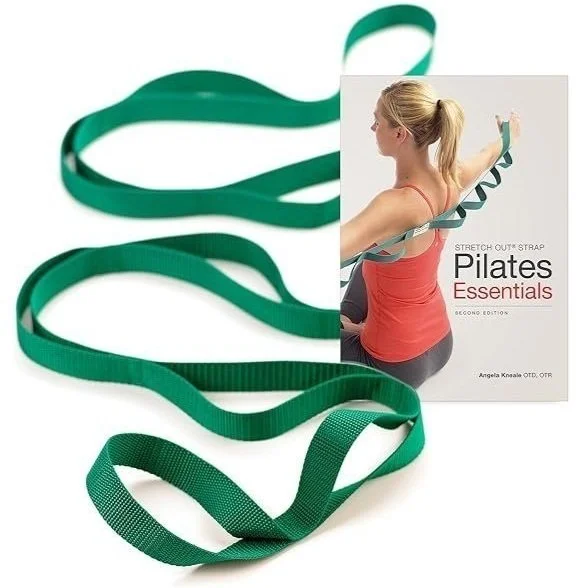
A stretching strap promotes better alignment and controlled muscle lengthening, while a yoga mat provides joint support and stability—both enhancing safety and effectiveness through improved biomechanics.

BUY ON AMAZON
BUY ON AMAZON
 

Addressing Muscle Imbalances: Focusing on the Tighter Side

If you notice one side of your body is significantly tighter than the other, this could indicate:

  • An imbalance in muscle strength

  • A previous injury that caused compensatory patterns

  • Postural habits affecting mobility

How to Fix It:

  • During warmups, spend extra time dynamically stretching the tighter side.

  • During cooldowns, hold static stretches longer on the less flexible side.

  • If asymmetry persists, consider working with a physical therapist to address underlying issues.

Conclusion: Smarter Stretching for Better Movement

Stretching isn’t just about flexibility—it’s about training your nervous system and connective tissues to function optimally. Keep in mind that your body needs time to adapt to a new stretching routine, so start slow and don’t stretch more than once a day.

Here’s what to remember:

Dynamic stretching before workouts prepares muscles for movement.
Static stretching after workouts improves flexibility and recovery.
Stretching should be intentional—focusing on imbalances and avoiding overdoing it.
Flexibility is a long-term process—consistency is key.

Rather than mindlessly holding stretches, use stretching as a tool to enhance movement, prevent injury, and improve overall mobility. If you’re struggling with flexibility issues, a structured stretching routine (or a visit to a physical therapist) could make all the difference.

References

  • Schleip, R., Gabbiani, G., Wilke, J., Naylor, I. L., Hinz, B., Zorn, A., Jäger, H., & Klingler, W. (2019). Fascia is able to actively contract and may thereby influence musculoskeletal dynamics: A histochemical and mechanographic investigation. Frontiers in Physiology, 10, 336.

  • Ogawa, Y., Hasegawa, N., Nakazawa, K., Akai, M., & Murayama, M. (2022). Effect of repeated fast stretches on stretch reflex excitability in individuals post-stroke. Frontiers in Neurology, 13, 764650.

  • Behm, D. G., Blazevich, A. J., Kay, A. D., & McHugh, M. (2016). Acute effects of muscle stretching on physical performance, range of motion, and injury incidence in healthy active individuals: A systematic review. Applied Physiology, Nutrition, and Metabolism, 41(1), 1–11.

  • Opplert, J., & Babault, N. (2018). Acute effects of dynamic stretching on muscle flexibility and performance: An analysis of the current literature. Sports Medicine, 48(2), 299–325.