
Summer either supercharges your fitness routine or quietly dismantles it. Either way, fall is a natural reset point — whether you're a high school athlete starting a season, an early-career professional short on time, a parent reclaiming an hour for yourself, or a master athlete navigating life post-career.
High School Athletes
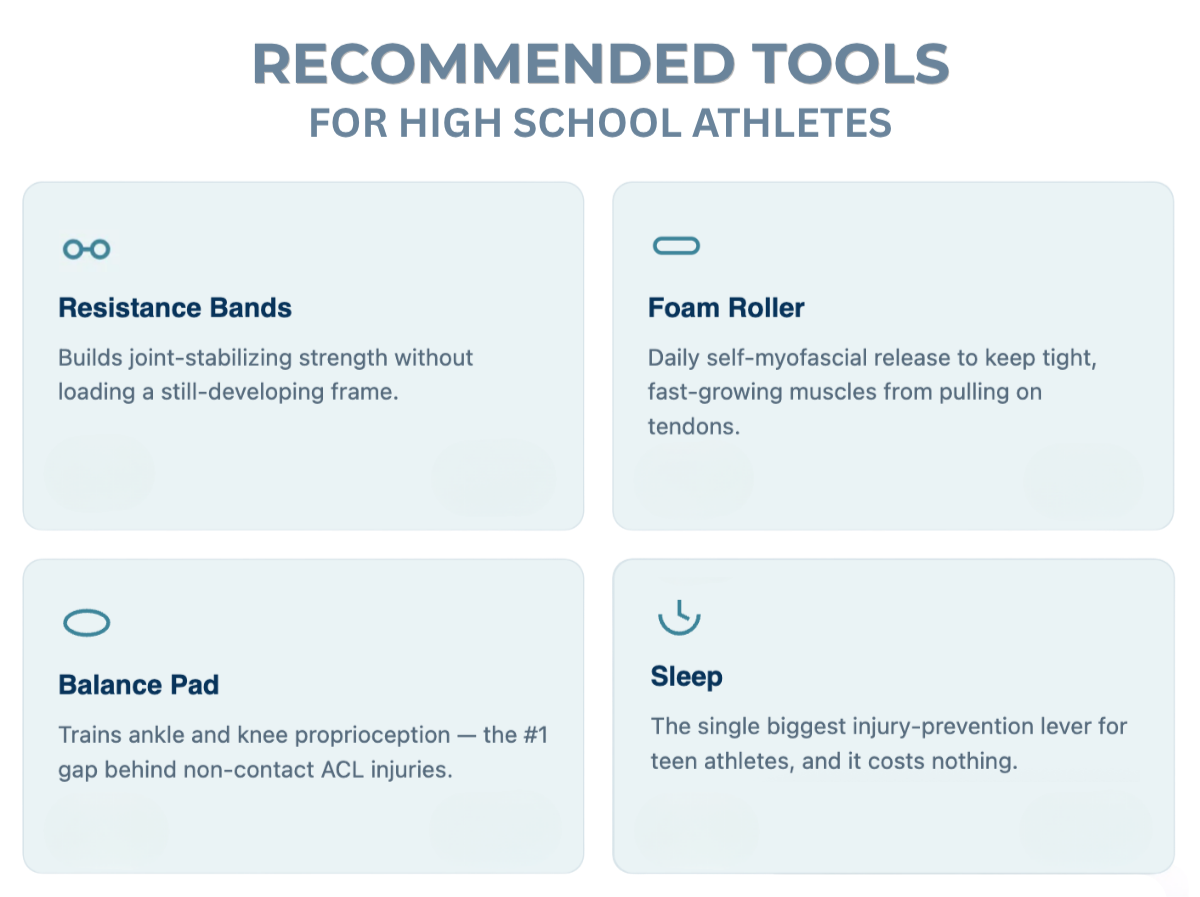
1. Respect the ramp-up. Going from 0 to 100 the moment practice starts is the most common mistake young athletes make — your lungs adapt faster than your tendons and joints. Research in Frontiers in Sports and Active Living (2023) found that progressive, individualized training significantly reduced injury in youth athletes returning to competitive sport. Nearly 60% of non-contact injuries happen during this transition, making a 2–3 week ramp-up essential, not optional.
2. Prioritize sleep like it's part of training. A 2024 Nutrients review confirmed sleep directly affects performance, recovery, and injury risk in adolescent athletes. Sleep Science research found athletes sleeping under 8 hours had a 1.7x higher injury risk.
3. Know soreness from a signal. Soreness fading in 24–48 hours is normal. Sharp or worsening pain needs evaluation.
→ Consider an Athletic Performance Assessment. Force plate analysis and movement screening can catch asymmetries before they become injuries — a 2025 International Journal of Sports Physical Therapy study confirmed jump metrics predict physical readiness.
→ Don't skip soft tissue care. A 2020 BMJ Open Sport & Exercise Medicine meta-analysis found massage reduces DOMS and speeds recovery — especially valuable during early-season load spikes.
Post-College / Early Career
1. Anchor workouts to a fixed time, not a free moment — free moments don't exist in early-career life. Treat training like a meeting that can't move.
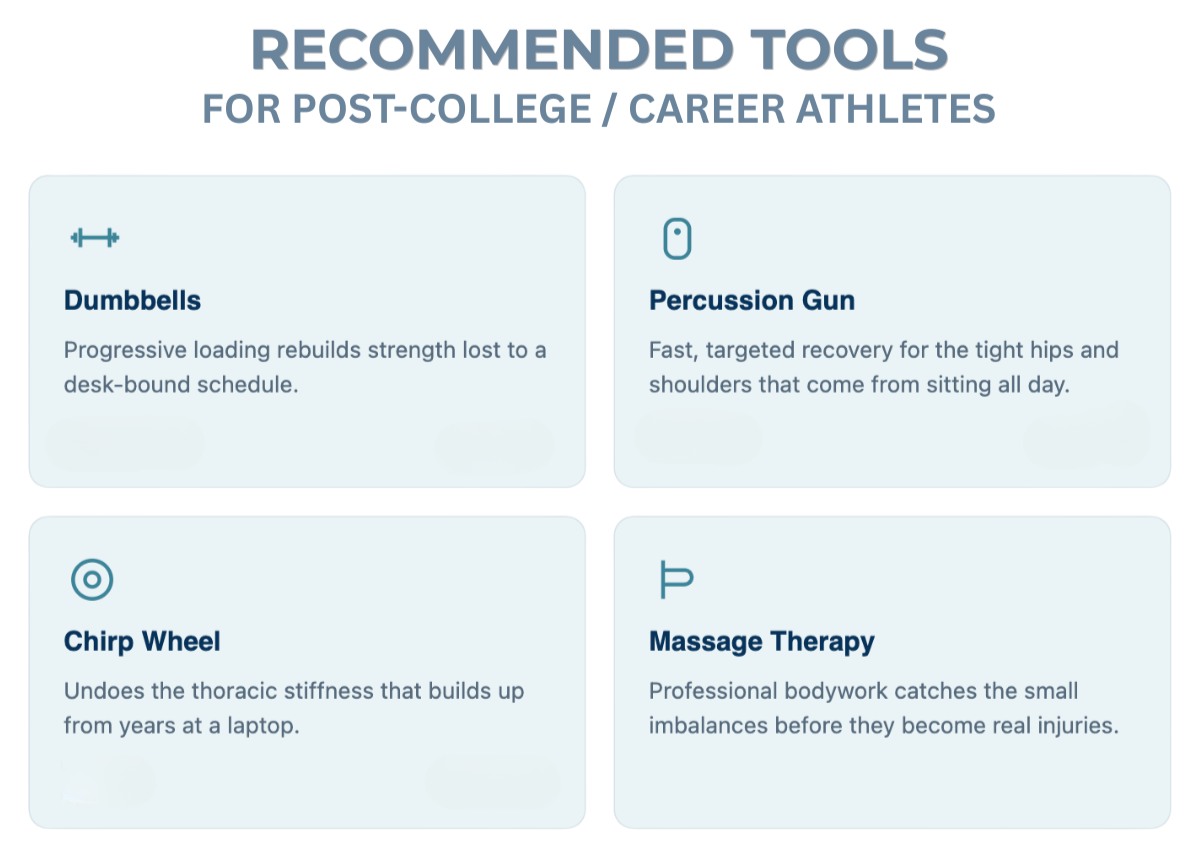
2. Start smaller than feels necessary. A 30-minute session you actually complete beats a 90-minute program you abandon. 2024 Sports Medicine research confirms injury-prevention programs work best with consistency.
3. Use your calendar like an athlete would. Map out four weeks, block workouts around travel and deadlines — this is periodization for real life.
Check out our Consistency Compass on IG @physical.therapt for building habits that hold under pressure.
→ Don't wait until something hurts. A 2025 systematic review of 47 studies found bi-weekly, 40–60 minute massage protocols produced the best recovery outcomes.
Parents
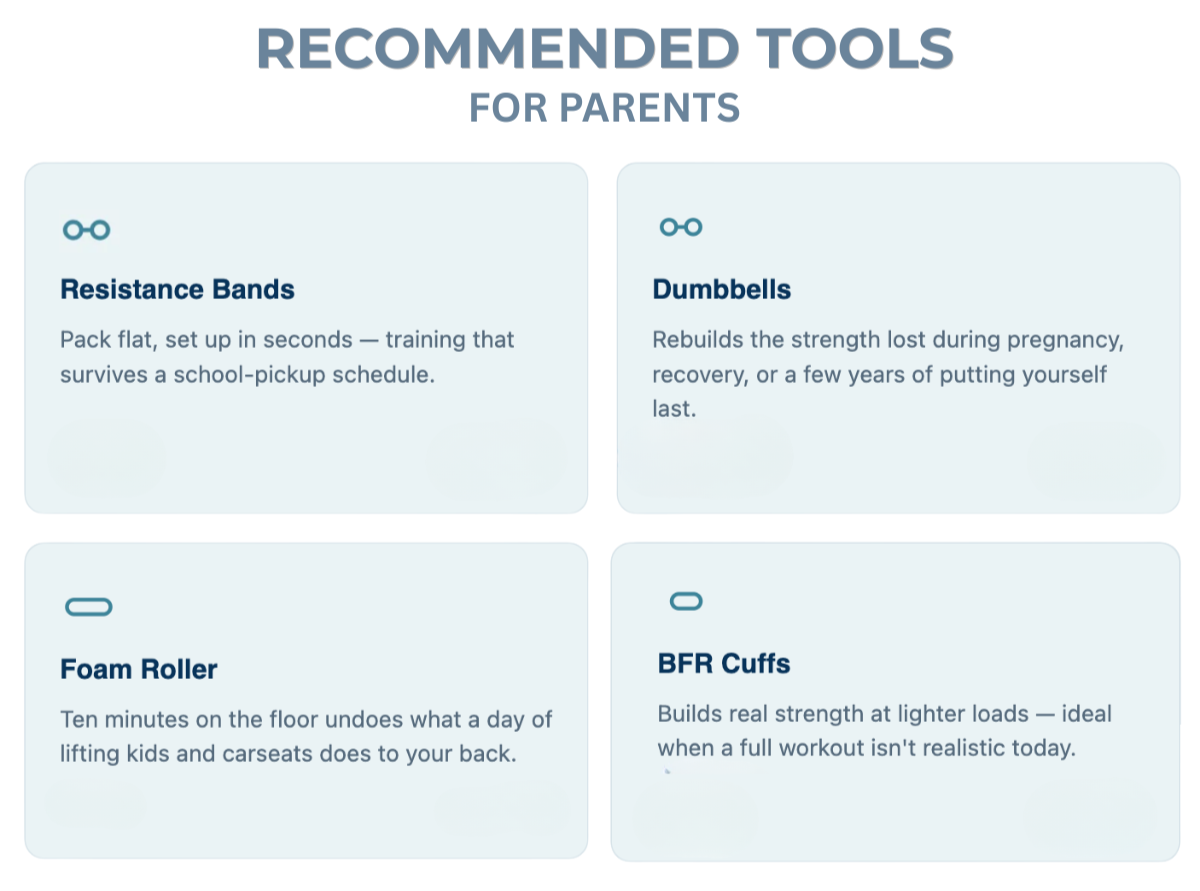
1. Claim the first window before anything else fills it. Block your workout time for the whole semester in week one — this is an investment in your family, not selfishness.
2. Lower the barrier, not the standard. A 20-minute home band circuit counts. Consistency, not intensity, predicts long-term fitness.
3. Treat yourself like a new patient. Start with an honest inventory rather than resuming your old routine — and address nagging pain instead of training around it.
Our Mid-Year Reset on IG @physical.therapt walks through a simple self-assessment.
→ Massage for tissue management. RCTs show massage reduces DOMS by ~30% and speeds functional recovery — maintenance, not luxury.
→ Get objective data on strength, power, and movement quality through an Athletic Performance Assessment.
Master Athletes
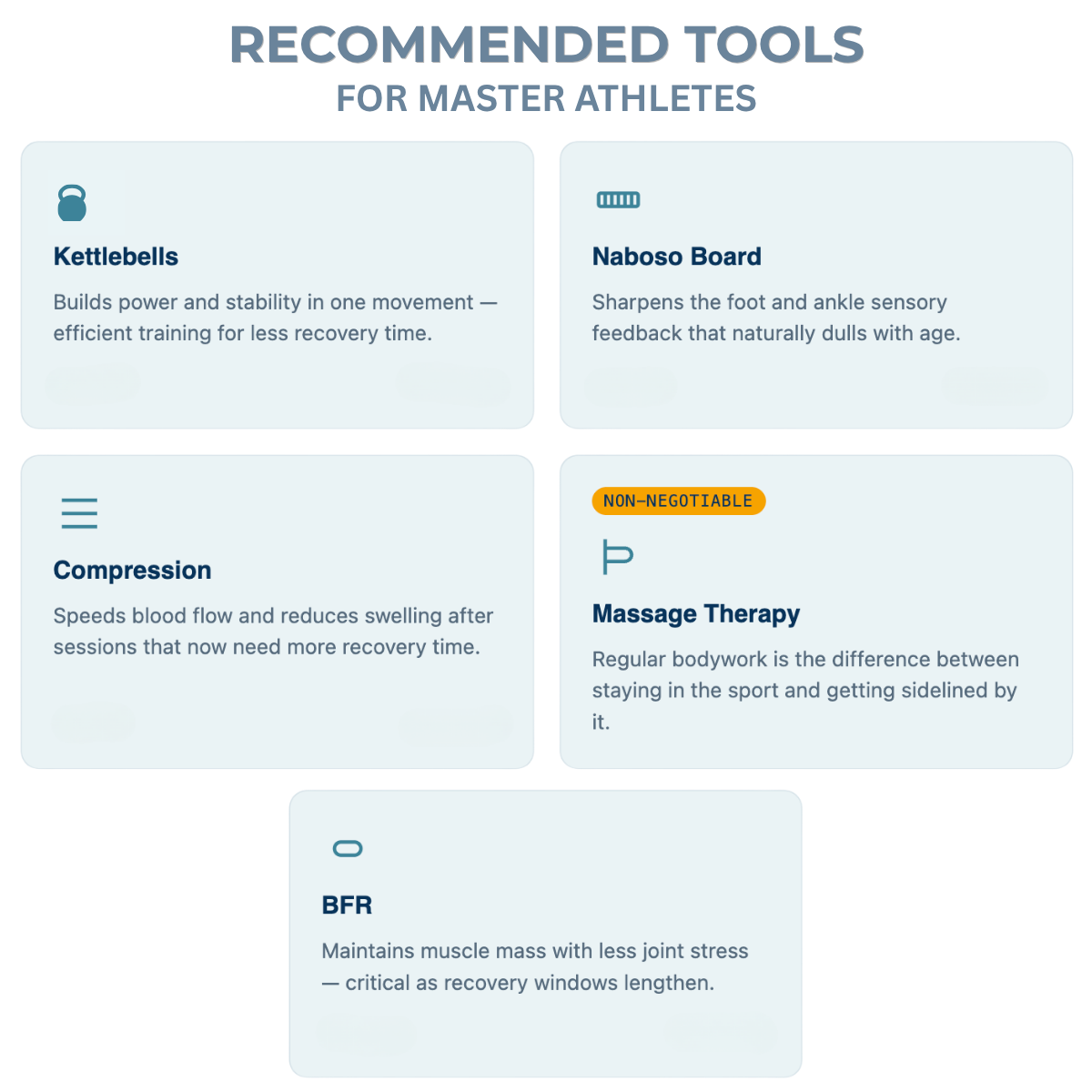
1. Rotate sports seasonally to distribute load and give tissues recovery time. Evidence shows the load-injury relationship is U-shaped — too little and too much are both risky.
2. Build your own periodization — 12-week blocks with a clear focus, followed by 2 weeks of lower intensity. A 2025 Premier Science Journal study confirms embedded recovery phases reduce injuries linked to chronic overload.
3. Use data, not just feel. Force plate metrics and strength symmetry give you a real baseline to train from.
The Consistency Compass on IG @physical.therapt helps athletes build habits across seasons, not just during them.
→ Make massage non-negotiable. A 2024 PRISMA review of 23 studies found sports massage effective for both acute and chronic injuries, with deep tissue work particularly beneficial for return-to-activity timelines.
The Bottom Line
Fall is a natural checkpoint — a brief but real window for new habits. Wherever you're starting from, the best move is one small, specific decision today, backed by the right support to help it stick.
Questions about an old injury or an athletic performance plan?
Reach out to the Physical TheraPT team.
References
Nyhus Hagum, M., et al. (2023). The effect of progressive and individualised sport-specific training on the prevalence of injury in football and handball student athletes: A randomised controlled trial. Frontiers in Sports and Active Living. https://pmc.ncbi.nlm.nih.gov/articles/PMC10279870/
Mason, L., et al. (2023). Sleep, nutrition, and injury risk in adolescent athletes: A narrative review. Nutrients, 15(24), 5101. https://doi.org/10.3390/nu15245101
Viegas, F., et al. (2022). Sleep as a predictor of musculoskeletal injuries in adolescent athletes. Sleep Science, 15(3), 305–311. https://doi.org/10.5935/1984-0063.20220055
Craven, J., et al. (2022). Effects of acute sleep loss on physical performance: A systematic and meta-analytical review. Sports Medicine, 52, 2669–2690. https://doi.org/10.1007/s40279-022-01706-y
Davis, H.L., Alabed, S., & Chico, T.J.A. (2020). Effect of sports massage on performance and recovery: A systematic review and meta-analysis. BMJ Open Sport & Exercise Medicine, 6(1), e000614. https://pmc.ncbi.nlm.nih.gov/articles/PMC7228568/
Shankar, D.S., et al. (2023). Force plate jump testing metrics are predictive of performance on a multimodal return to sport testing protocol. Journal of Sports Medicine and Physical Fitness, 63(11), 1208–1217. https://doi.org/10.23736/S0022-4707.23.14850-X
Robles-Palazón, F.J., et al. (2023). Force plate methodologies applied to injury profiling and rehabilitation in sport: A scoping review protocol. PLOS ONE. https://doi.org/10.1371/journal.pone.0292487
Lauersen, J.B., Bertelsen, D.M., & Andersen, L.B. (2018). Strength training as superior, dose-dependent and safe prevention of acute and overuse sports injuries. British Journal of Sports Medicine, 52(24), 1557–1563.
Impellizzeri, F.M., et al. (2020). Training load and its role in injury prevention, part I: Back to the future. Journal of Athletic Training, 55(9), 885–892. https://doi.org/10.4085/1062-6050-500-19
Premierscience.com. (2025). Load management and injury prevention in elite athletes. Premier Science Journal. https://premierscience.com/pjs-25-1041/
IGI Active in Sport. (2025). The effectiveness of massage therapy in treating sports injuries: A PRISMA-based systematic review. https://journal.igiinsight.com/index.php/IgiActivein/article/download/108/98
Sams, L., et al. (2023). The effect of percussive therapy on musculoskeletal performance and experiences of pain. International Journal of Sports Physical Therapy, 18, 309–327. https://doi.org/10.26603/001c.73795
Alonso-Calvete, A., et al. (2022). Does vibration foam roller influence performance and recovery? Sports Medicine – Open, 8, 32. https://doi.org/10.1186/s40798-022-00421-2
Liddle, N., et al. (2024). Exercise-based injury prevention programmes on injury risk in adult recreational athletes. Sports Medicine, 54(3), 645–658.