
Physical TheraPT

Sports Injury Recovery

Injury Prevention Tips for Every Athlete, Every Age

Summer either supercharges your fitness routine or quietly dismantles it. Either way, fall is a natural reset point — whether you're a high school athlete starting a season, an early-career professional short on time, a parent reclaiming an hour for yourself, or a master athlete navigating life post-career.


High School Athletes

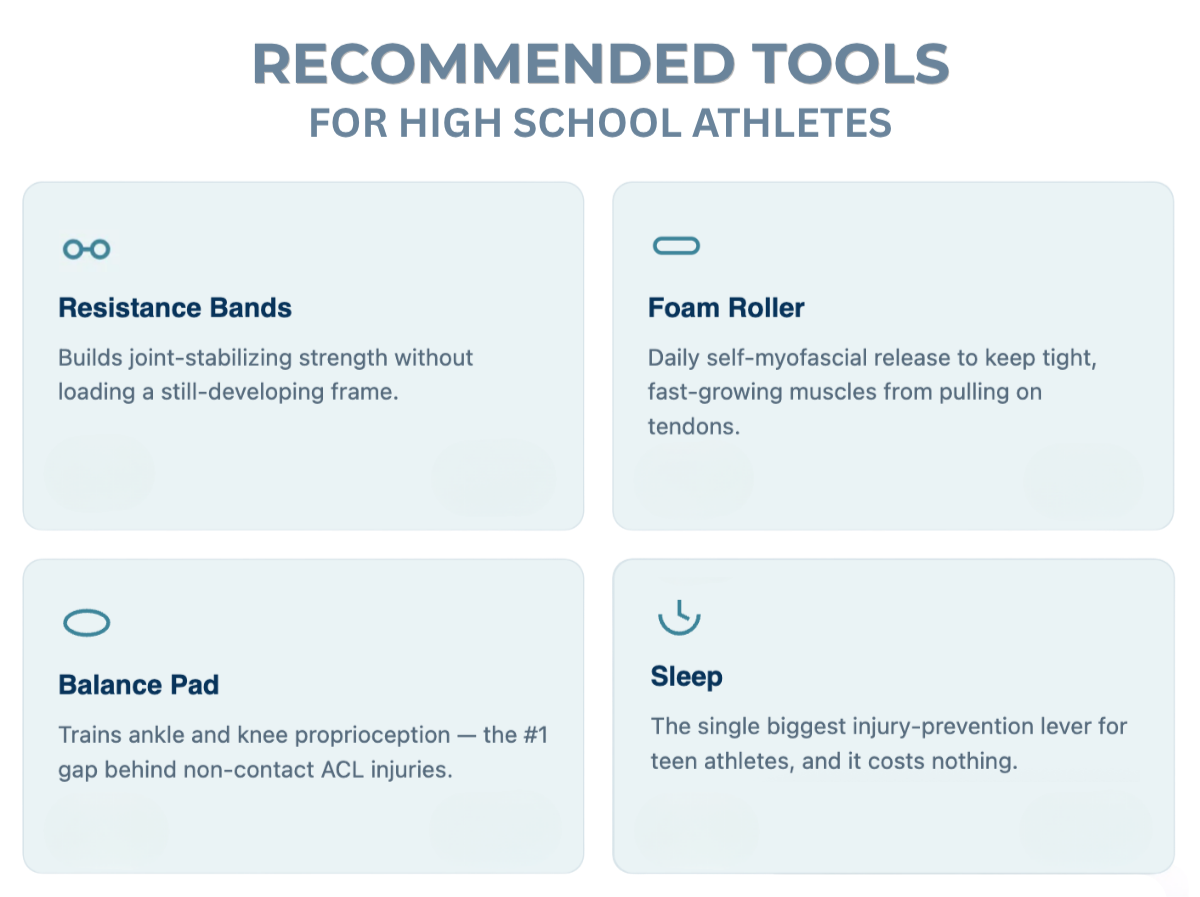
1. Respect the ramp-up. Going from 0 to 100 the moment practice starts is the most common mistake young athletes make — your lungs adapt faster than your tendons and joints. Research in Frontiers in Sports and Active Living (2023) found that progressive, individualized training significantly reduced injury in youth athletes returning to competitive sport. Nearly 60% of non-contact injuries happen during this transition, making a 2–3 week ramp-up essential, not optional.

2. Prioritize sleep like it's part of training. A 2024 Nutrients review confirmed sleep directly affects performance, recovery, and injury risk in adolescent athletes. Sleep Science research found athletes sleeping under 8 hours had a 1.7x higher injury risk.

3. Know soreness from a signal. Soreness fading in 24–48 hours is normal. Sharp or worsening pain needs evaluation.

→ Consider an Athletic Performance Assessment. Force plate analysis and movement screening can catch asymmetries before they become injuries — a 2025 International Journal of Sports Physical Therapy study confirmed jump metrics predict physical readiness.

→ Don't skip soft tissue care. A 2020 BMJ Open Sport & Exercise Medicine meta-analysis found massage reduces DOMS and speeds recovery — especially valuable during early-season load spikes.

Post-College / Early Career

1. Anchor workouts to a fixed time, not a free moment — free moments don't exist in early-career life. Treat training like a meeting that can't move.

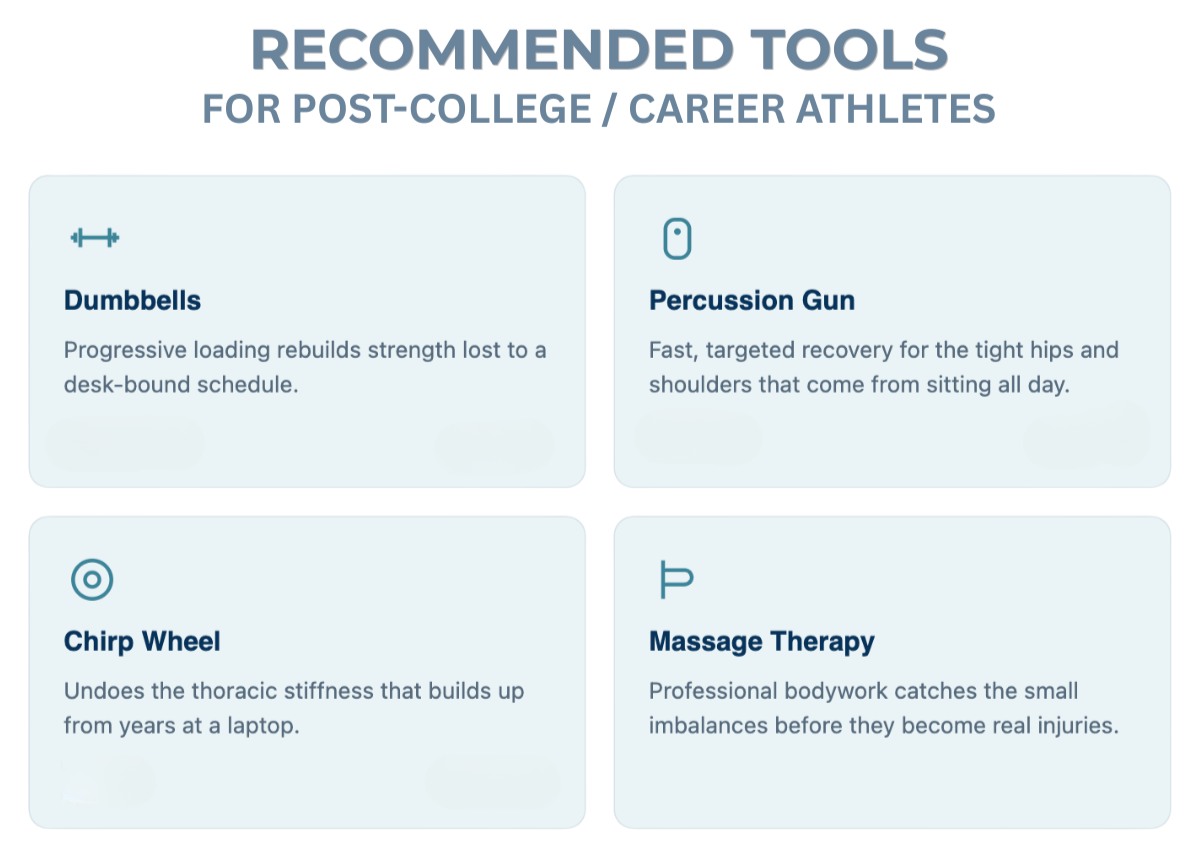
2. Start smaller than feels necessary. A 30-minute session you actually complete beats a 90-minute program you abandon. 2024 Sports Medicine research confirms injury-prevention programs work best with consistency.

3. Use your calendar like an athlete would. Map out four weeks, block workouts around travel and deadlines — this is periodization for real life.

Check out our Consistency Compass on IG @physical.therapt for building habits that hold under pressure.

→ Don't wait until something hurts. A 2025 systematic review of 47 studies found bi-weekly, 40–60 minute massage protocols produced the best recovery outcomes.

Parents

1. Claim the first window before anything else fills it. Block your workout time for the whole semester in week one — this is an investment in your family, not selfishness.

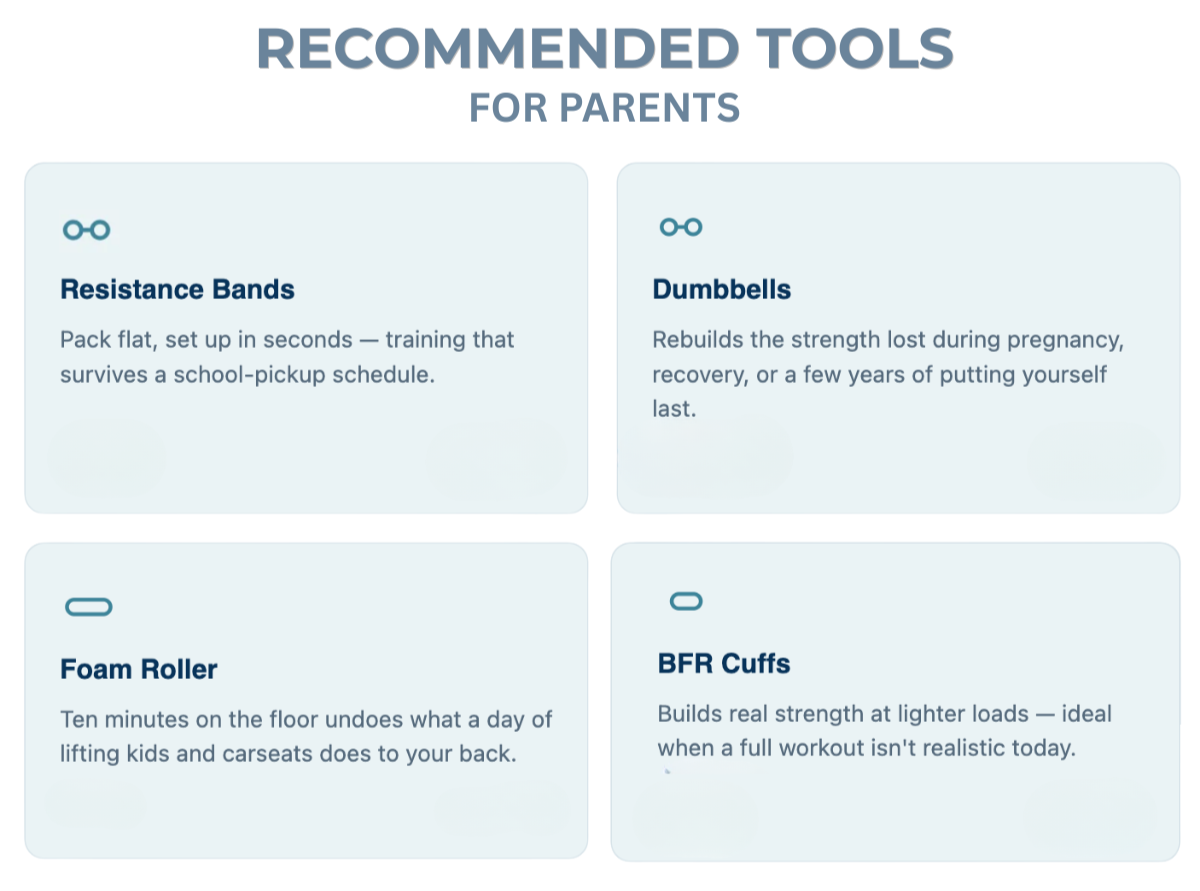
2. Lower the barrier, not the standard. A 20-minute home band circuit counts. Consistency, not intensity, predicts long-term fitness.

3. Treat yourself like a new patient. Start with an honest inventory rather than resuming your old routine — and address nagging pain instead of training around it.

Our Mid-Year Reset on IG @physical.therapt walks through a simple self-assessment.

→ Massage for tissue management. RCTs show massage reduces DOMS by ~30% and speeds functional recovery — maintenance, not luxury.

→ Get objective data on strength, power, and movement quality through an Athletic Performance Assessment.


Master Athletes

1. Rotate sports seasonally to distribute load and give tissues recovery time. Evidence shows the load-injury relationship is U-shaped — too little and too much are both risky.

2. Build your own periodization — 12-week blocks with a clear focus, followed by 2 weeks of lower intensity. A 2025 Premier Science Journal study confirms embedded recovery phases reduce injuries linked to chronic overload.

3. Use data, not just feel. Force plate metrics and strength symmetry give you a real baseline to train from.

The Consistency Compass on IG @physical.therapt helps athletes build habits across seasons, not just during them.

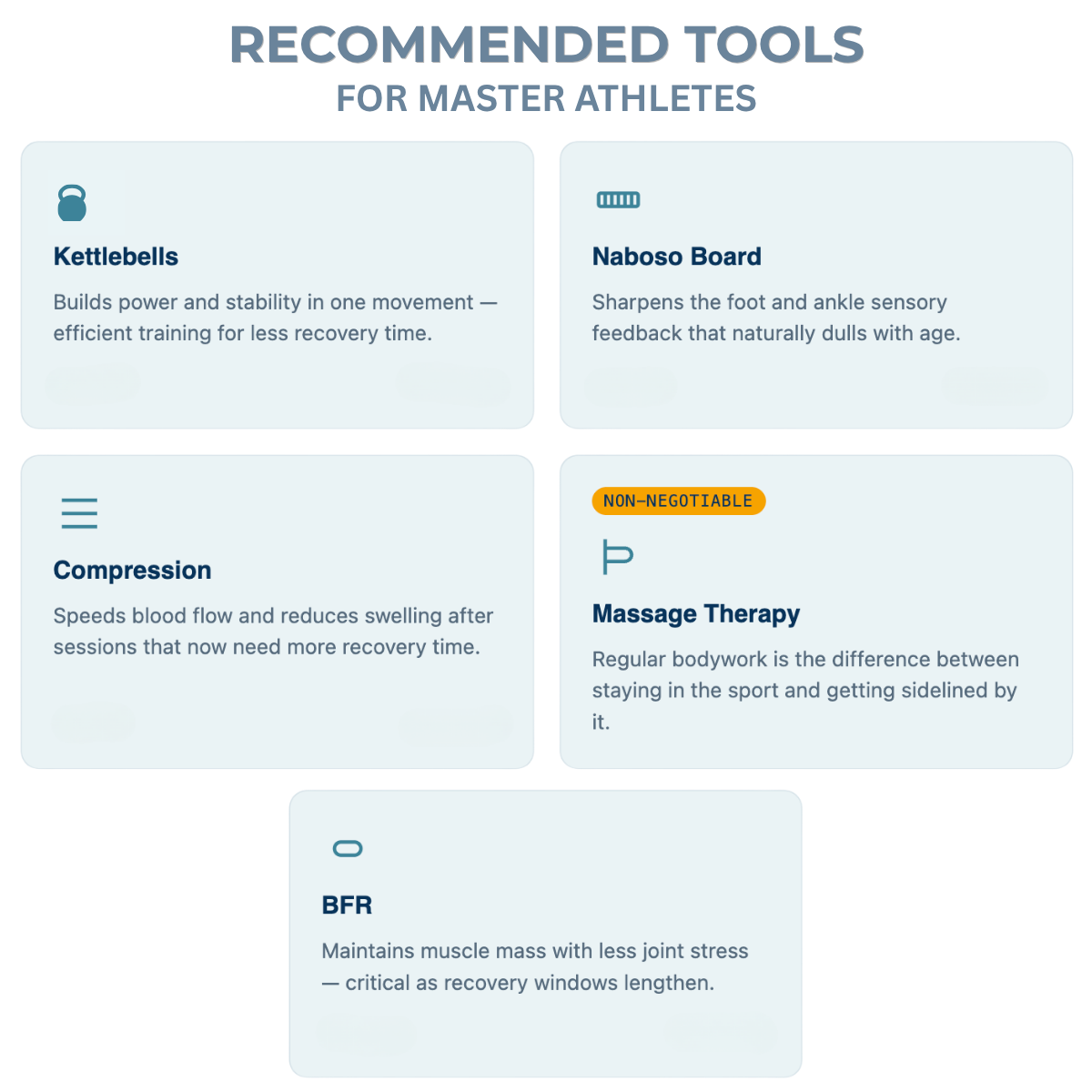
→ Make massage non-negotiable. A 2024 PRISMA review of 23 studies found sports massage effective for both acute and chronic injuries, with deep tissue work particularly beneficial for return-to-activity timelines.
The Bottom Line

Fall is a natural checkpoint — a brief but real window for new habits. Wherever you're starting from, the best move is one small, specific decision today, backed by the right support to help it stick.


Questions about an old injury or an athletic performance plan?
Reach out to the Physical TheraPT team.


References

  1. Nyhus Hagum, M., et al. (2023). The effect of progressive and individualised sport-specific training on the prevalence of injury in football and handball student athletes: A randomised controlled trial. Frontiers in Sports and Active Living. https://pmc.ncbi.nlm.nih.gov/articles/PMC10279870/

  2. Mason, L., et al. (2023). Sleep, nutrition, and injury risk in adolescent athletes: A narrative review. Nutrients, 15(24), 5101. https://doi.org/10.3390/nu15245101

  3. Viegas, F., et al. (2022). Sleep as a predictor of musculoskeletal injuries in adolescent athletes. Sleep Science, 15(3), 305–311. https://doi.org/10.5935/1984-0063.20220055

  4. Craven, J., et al. (2022). Effects of acute sleep loss on physical performance: A systematic and meta-analytical review. Sports Medicine, 52, 2669–2690. https://doi.org/10.1007/s40279-022-01706-y

  5. Davis, H.L., Alabed, S., & Chico, T.J.A. (2020). Effect of sports massage on performance and recovery: A systematic review and meta-analysis. BMJ Open Sport & Exercise Medicine, 6(1), e000614. https://pmc.ncbi.nlm.nih.gov/articles/PMC7228568/

  6. Shankar, D.S., et al. (2023). Force plate jump testing metrics are predictive of performance on a multimodal return to sport testing protocol. Journal of Sports Medicine and Physical Fitness, 63(11), 1208–1217. https://doi.org/10.23736/S0022-4707.23.14850-X

  7. Robles-Palazón, F.J., et al. (2023). Force plate methodologies applied to injury profiling and rehabilitation in sport: A scoping review protocol. PLOS ONE. https://doi.org/10.1371/journal.pone.0292487

  8. Lauersen, J.B., Bertelsen, D.M., & Andersen, L.B. (2018). Strength training as superior, dose-dependent and safe prevention of acute and overuse sports injuries. British Journal of Sports Medicine, 52(24), 1557–1563.

  9. Impellizzeri, F.M., et al. (2020). Training load and its role in injury prevention, part I: Back to the future. Journal of Athletic Training, 55(9), 885–892. https://doi.org/10.4085/1062-6050-500-19

  10. Premierscience.com. (2025). Load management and injury prevention in elite athletes. Premier Science Journal. https://premierscience.com/pjs-25-1041/

  11. IGI Active in Sport. (2025). The effectiveness of massage therapy in treating sports injuries: A PRISMA-based systematic review. https://journal.igiinsight.com/index.php/IgiActivein/article/download/108/98

  12. Sams, L., et al. (2023). The effect of percussive therapy on musculoskeletal performance and experiences of pain. International Journal of Sports Physical Therapy, 18, 309–327. https://doi.org/10.26603/001c.73795

  13. Alonso-Calvete, A., et al. (2022). Does vibration foam roller influence performance and recovery? Sports Medicine – Open, 8, 32. https://doi.org/10.1186/s40798-022-00421-2

  14. Liddle, N., et al. (2024). Exercise-based injury prevention programmes on injury risk in adult recreational athletes. Sports Medicine, 54(3), 645–658.


When Is an Athlete Actually Ready?

Ever watch an athlete pass every physical test with flying colors but still hesitate when it's time to compete? Or see someone who's technically cleared but just doesn't look like themselves on the field? That's the psychological side of injury recovery — and it's just as important as the physical side.

Here's what many don't realize: an athlete who returns to sport when not psychologically ready may be at increased risk for mental health crisis, physical injury, or both. Let's break down the mental obstacles high school athletes face after ACL injuries, shoulder dislocations, and ankle sprains — and what actually helps them overcome these barriers.


The Mind-Body Connection: Why Psychology Matters

Psychological readiness is the critical missing piece in return-to-sport decisions. After ACL reconstruction, mental health scores directly correlate with successful return to sport. In fact, a recent analysis found that psychological readiness was the most effective predictor of return-to-sport success, with an effect size of 1.55 — outperforming physical tests like hop tests and limb symmetry indices.

The numbers tell a sobering story. Despite technical surgical successes and well-designed rehabilitation programs, many athletes never reach their preinjury athletic performance level, and some never return to their primary sport at all. This gap between physical capability and actual return suggests that factors beyond muscle strength and joint stability are at play.


The Psychological Obstacles: What Athletes Actually Face

Fear is the biggest mental barrier — specifically, fear of reinjury and fear of movement (kinesiophobia). Research on teens and young adults after ACL reconstruction found that each one-point increase in kinesiophobia was associated with a 28% higher likelihood of reporting unacceptable psychological readiness. Greater psychological readiness was strongly associated with lower kinesiophobia in both teens and adults.

The emotional landscape of injury recovery includes several warning signs that indicate poor adjustment:

  • Unreasonable fear of reinjury

  • Loss of athletic identity

  • Continued denial of injury severity

  • General impatience and irritability

  • Rapid mood swings

  • Withdrawal from teammates and support networks

  • Extreme guilt about letting the team down

  • Dwelling on minor physical complaints

  • Obsession with the question of when they can return

Nearly half of young athletes score below acceptable thresholds for psychological readiness after ACL reconstruction, highlighting just how common these struggles are.


What Psychological Readiness Actually Looks Like

An athlete who is psychologically ready to play has three key characteristics: realistic expectations of performance, high self-efficacy, and low anxiety. But here's an interesting finding: perceived physical competence matters more than actual physical competence when it comes to psychological readiness.

In a study of young athletes after ACL reconstruction, meeting criteria for perceived physical competence was associated with higher psychological readiness to return to sport, while meeting actual physical competence criteria showed no association with psychological response. This suggests that how athletes feel about their abilities may be more important than objective measurements alone.

For adolescent athletes specifically, the emotional response appears more influential than confidence in performance or risk appraisal. ACL-RSI scores increased significantly between 6 and 12 months post-surgery (from 55 to 71), and the emotions factor had better predictive ability for return to play than the confidence and risk appraisal factors.


Evidence-Based Assessment Tools

Several validated screening tools can help identify athletes who need psychological support:

Injury-specific tools:

  • ACL-Return to Sport after Injury scale (ACL-RSI): The gold standard for assessing psychological readiness after ACL reconstruction, with a cutoff score of 77 distinguishing acceptable from unacceptable readiness

  • Injury-Psychological Readiness to Return to Sport questionnaire (I-PRRS): Psychometric test specifically designed to assess psychological readiness of injured athletes

  • Tampa Scale of Kinesiophobia (TSK-11): Measures pain-related fear of movement

  • Reinjury Anxiety Inventory (RIAI): Specifically measures reinjury anxiety

General mental health screening:

  • Patient Health Questionnaire-9 (PHQ-9): Assesses presence of depression

  • Generalized Anxiety Disorder-7 (GAD-7): Assesses anxiety symptoms

  • Athlete Sleep Screening Questionnaire (ASSQ): Evaluates sleep disturbance

  • Sport Mental Health Assessment Tool 1 (SMHAT-1): Developed by the International Olympic Committee for comprehensive mental health assessment in athletes

Serial assessments using these tools offer a continuing profile of the athlete's psychological progression throughout recovery.


What Actually Helps: Evidence-Based Interventions

Three psychological elements are most important for positive rehabilitation and return to preinjury level of play: autonomy, competence, and relatedness (from self-determination theory).

Specific strategies that support positive return to sport experiences include:

  1. Reducing reinjury anxieties using modeling techniques — connecting athletes with others who have successfully recovered from similar injuries

  2. Building confidence through functional testing and goal setting — establishing both short- and long-term recovery goals

  3. Providing social support — keeping athletes involved with their team, teammates, and friends throughout recovery

  4. Reducing stressors related to premature return — ensuring athletes understand realistic timelines and expectations

  5. Fostering athlete autonomy — involving athletes in decision-making about their recovery

  6. Teaching specific stress coping skills:

    • Positive self-talk and cognitive restructuring

    • Relaxation techniques (meditation, deep breathing, progressive muscle relaxation)

    • Imagery and visualization

    • Goal setting

Research shows that psychological strategies like goal setting, positive self-statements, cognitive restructuring, and imagery/visualization are associated with faster recovery.


Building Trust and Addressing Misinformation

The foundation of psychological support starts with the healthcare team. Critical factors include:

  • Building trust and rapport — listening not only to make a medical diagnosis but also to assess and monitor emotional state

  • Educating the athlete about the injury — providing clear explanations in terms they can understand, with opportunities to ask questions

  • Identifying misinformation — athletes may obtain inaccurate information from parents, coaches, teammates, or the internet that contributes to confusion and emotional upheaval

  • Preparing parents, coaches, and other stakeholders — with the athlete's permission, educating support networks that injury management is individualized

  • Assessing the social support network — understanding who the athlete can rely on and their perception of that support


When to Refer to Mental Health Professionals

Athletes with problematic emotional reactions should be referred to licensed mental health professionals, preferably those with experience working with athletes. Early intervention and referral to the mental health network is important.

The American College of Sports Medicine recommends integrating sports psychologists and other mental health professionals into the athletic care network and coordinating referrals for mental health services as needed.


The Unique Challenges for High School Athletes

Adolescent athletes face specific psychological challenges. Adults were twice as likely as teens to report unacceptable psychological readiness after ACL reconstruction, suggesting that younger athletes may have different psychological responses or support needs.

Additionally, athletes with moderate preinjury adversity experienced less negative psychological responses compared to those with low or high preinjury adversity, suggesting that some prior experience with challenges may build resilience.


TOOLS FOR BUILDING CONFIDENCE

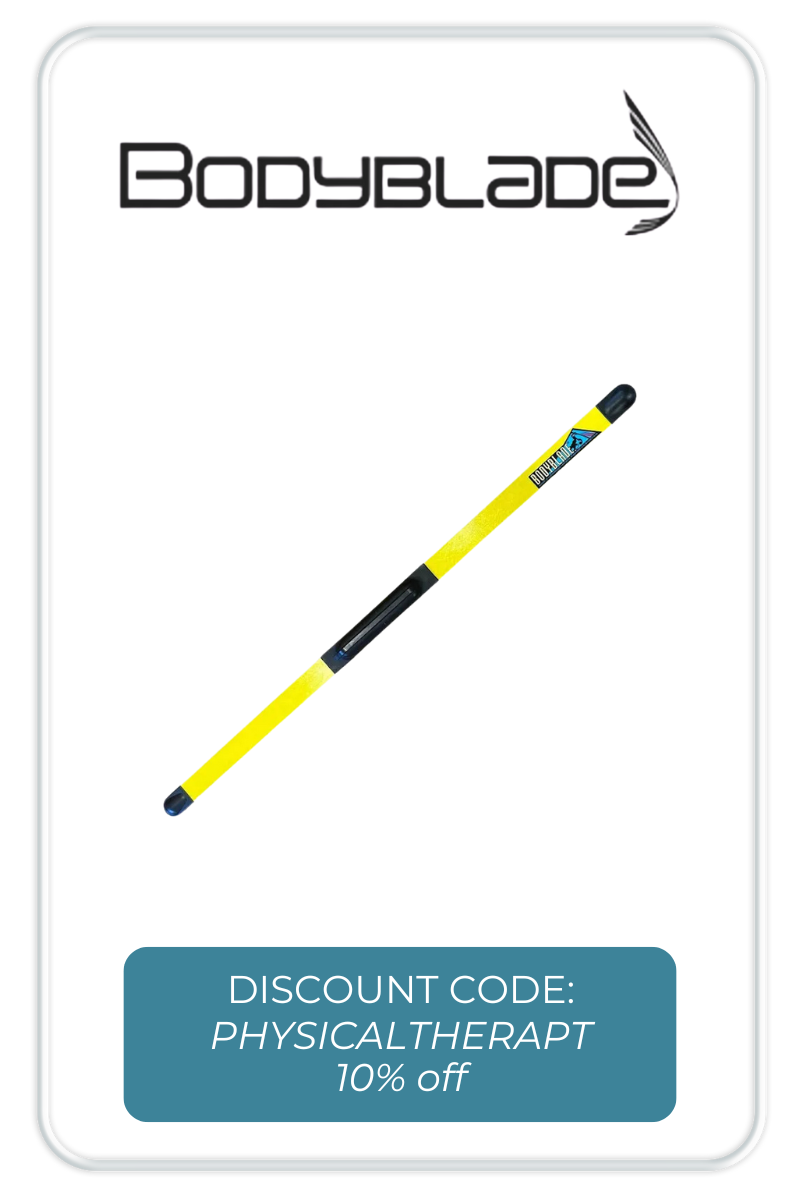
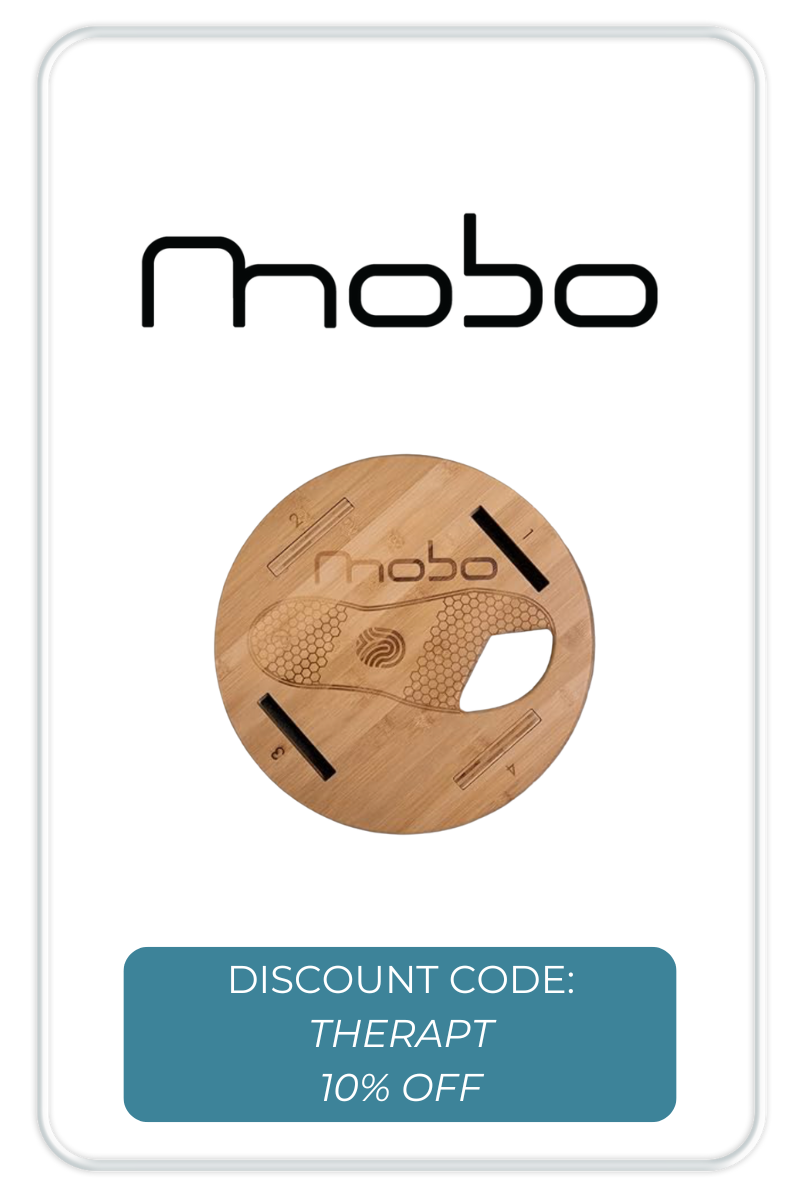
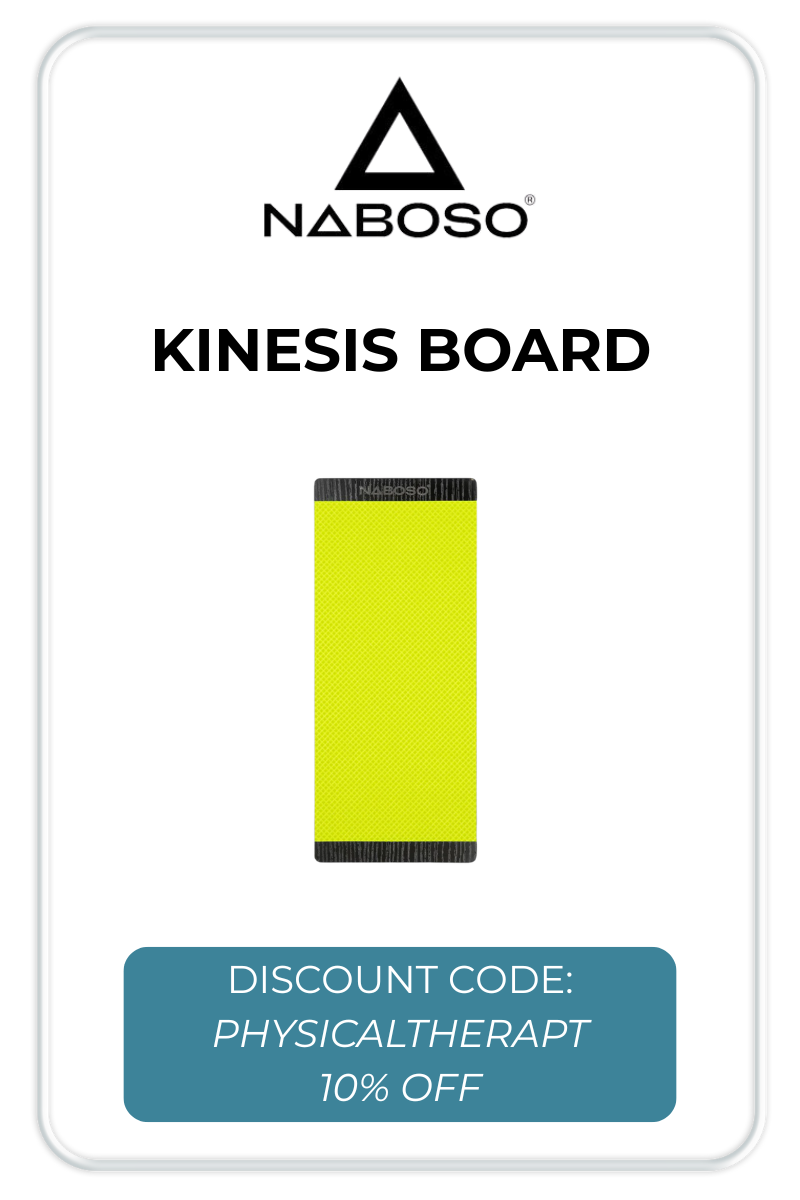
Resistance bands, balance pads and boards, and BFR cuffs are a few of the essential tools in rehabilitation. Resistance bands safely build strength, balance pads enhance coordination and stability, and BFR cuffs accelerate recovery through low-load training.

Below are our top 5 recommended products to use as a recovering athlete.


Click the image to shop on Amazon through our affiliate links and access possible discounts!


The Bottom Line

Physical clearance is only half the battle. Psychological readiness should be evaluated and incorporated into return-to-sport decision-making for all injured high school athletes, not just those recovering from ACL injuries.

The good news? High levels of optimism and self-efficacy and lower levels of depression and stress are associated with improved recovery from injury. Athletes who maintain optimism, believe in their ability to recover, and receive strong social support while managing stress and depressive symptoms are more likely to complete rehabilitation successfully, return to sport faster, and achieve better functional outcomes.

The key is recognizing that physical healing and psychological readiness must progress together — and when they do, high school athletes have the best chance of not just returning to their sport, but thriving in it.


References

Getting Back Out There, The Right Way

Ever watch your star player go down with a knee injury, see a shoulder pop out during a tackle, or witness an ankle roll on the court? These moments are gut-wrenching for athletes, parents, and coaches alike. But here's the good news: most high school athletes can successfully return to their sport after these common injuries — if they follow the right roadmap for physical recovery.

Let's break down what it takes to get physically cleared for return to play after an ACL tear, shoulder dislocation, or ankle sprain.


The ACL Injury: A Marathon, Not a Sprint

An ACL tear is one of the most feared injuries in youth sports, and for good reason. Nearly a quarter of a million ACL injuries occur annually in the US and Canada, with rates in high school athletes reaching 5.5 per 100,000 athlete exposures. But here's what many don't realize: getting back on the field isn't just about healing — it's about meeting specific physical benchmarks.

The minimum timeline is 9 months from surgery, and that's not arbitrary. Your body needs time for the graft to incorporate biologically, and rushing back increases reinjury risk dramatically. In fact, athletes who returned before 9 months had significantly higher rates of reinjury compared to those who waited.

But time alone isn't enough. Athletes must achieve at least 90% limb symmetry index (LSI) for both quadriceps strength and hop testing before getting cleared for competition. This means the injured leg needs to perform at 90% or better compared to the uninjured leg. Athletes who met these criteria had a reinjury rate of just 4.5% within 2 years, compared to 33% in those who didn't meet the criteria.

The recovery follows a structured, mulit-phase approach:

  • Early phase (weeks 0-6): Focus on reducing swelling, restoring range of motion to 0-115 degrees, and achieving 60% quadriceps strength symmetry

  • Intermediate phase (weeks 7-9): Progress to 70% strength symmetry with full, symmetrical range of motion

  • Late phase (weeks 10-16): Reach 75-80% strength symmetry and begin running when you hit 80% and can demonstrate single leg squats, step downs and hops with good mechanics

  • Transitional phase (months 4-6): Introduce jumping, sprinting, and agility drills at 85% strength symmetry

  • Return-to-sport phase (months 6-12): Sport-specific training with final clearance requiring 90% symmetry, no pain or swelling, and adequate confidence levels

Here's the reality check: only 40-55% of athletes return to their pre-injury activity level after ACL reconstruction. Even among highly motivated European professional soccer players with excellent resources, only 65% returned to their previous level. This isn't meant to discourage — it's meant to emphasize the importance of working with a sports physical therapist and following a comprehensive plan.


Shoulder Dislocations: High Risk, But Quick Recovery Possible

The shoulder is the most commonly dislocated joint in the body, and it usually dislocates anteriorly (toward the front). For high school athletes, especially those in contact and collision sports, this injury comes with a sobering statistic: recurrence rates can reach up to 90% in active patients younger than 25 years.

But here's where shoulder dislocations differ from ACL injuries: return to play can happen as early as 2-3 weeks after injury for athletes who are pain-free, have symmetrical shoulder range of motion, and can perform sport-specific motions. Some athletes with recurrent dislocations who experience easy relocation, minimal pain, full range of motion, and protective strength may even return the same day.

The treatment approach depends on several factors:

Immediate management:

  • Attempted relocation on the field before muscle spasm develops

  • Neurovascular assessment before and after reduction

  • Immobilization and pain management after successful reduction

  • Post-reduction radiographs after first-time dislocation

Recovery protocol:

  • Sling use for 2-4 weeks for comfort (though current evidence doesn't mandate a specific duration)

  • Graduated rehabilitation focusing on passive and active range of motion

  • Physical therapy addressing joint range of motion, scapular control, rotator cuff strength, and sport-specific conditioning

Surgical considerations: Surgery should be considered for first-time dislocations in active patients under 25 due to the extremely high recurrence rate, or when there are complications like large bony defects.

Interestingly, research on high school athletes shows that 85% of those treated nonoperatively successfully returned to their sport and completed at least one full season without additional injury. Athletes with subluxations (partial dislocations) fared even better, with an 89% success rate compared to 26% for complete dislocations.


Ankle Sprains: The Most Common Culprit

Ankle sprains are the most common foot-ankle and sports-related injury for which people seek medical care. Four in every 10 first-time ankle sprains occur during sports participation. The good news? Most athletes bounce back quickly.!

High school athletes have a 75% chance of returning to sport within 3 days after a first-time , Grade I ankle sprain, and a 95% chance within 10 days. In college athletics, 44.4% of athletes returned to play in less than 24 hours. However, more severe Grade II and III sprains involving multiple ligaments can sideline athletes for more than 3 weeks.

The key to successful return involves addressing five critical domains — the PAASS framework:

  • Pain: Both during sport participation and over the last 24 hours

  • Ankle impairments: Range of motion, muscle strength, endurance, and power

  • Athlete perception: Confidence, reassurance, stability, and psychological readiness

  • Sensorimotor control: Proprioception and dynamic postural control/balance

  • Sport/functional performance: Hopping, jumping, agility, sport-specific drills, and ability to complete a full training session

Supervised exercise programs addressing strength, coordination, proprioception, and functional deficits lead to faster return to sports. Evidence also supports the use of compression stockings and anteroposterior ankle joint mobilization for quicker recovery.

General return-to-work and sport guidelines suggest:

  • Return to sedentary work: 2-6 weeks following injury

  • Return to physical occupations and sports: 6-8 weeks

These timelines should be adjusted based on injury severity, rehabilitation response, and specific task requirements. Working with a sports medicine clinician will be key for determining optimal readiness.


TOOLS FOR BUILDING CONFIDENCE

Resistance bands, balance pads and boards, and BFR cuffs are a few of the essential tools in rehabilitation. Resistance bands safely build strength, balance pads enhance coordination and stability, and BFR cuffs accelerate recovery through low-load training.

Below are our top 5 recommended products to use as a recovering athlete.


Click the image to shop on Amazon through our affiliate links and access possible discounts!


The Bottom Line

Physical clearance for return to play isn't one-size-fits-all. ACL injuries require the longest recovery with the most stringent criteria — minimum 9 months and 90% strength symmetry. Shoulder dislocations can allow quicker return (2-3 weeks) but carry high recurrence risk in young athletes. Ankle sprains typically resolve fastest, with most athletes back within days to weeks.

The common thread? Meeting objective physical criteria matters more than arbitrary timelines. Pain-free movement, symmetrical strength, full range of motion, and sport-specific performance capabilities aren't just checkboxes — they're your best insurance against reinjury.

In Part 2, we'll explore the mental side of return to play — because as we've learned, physical readiness is only half the battle.


References