
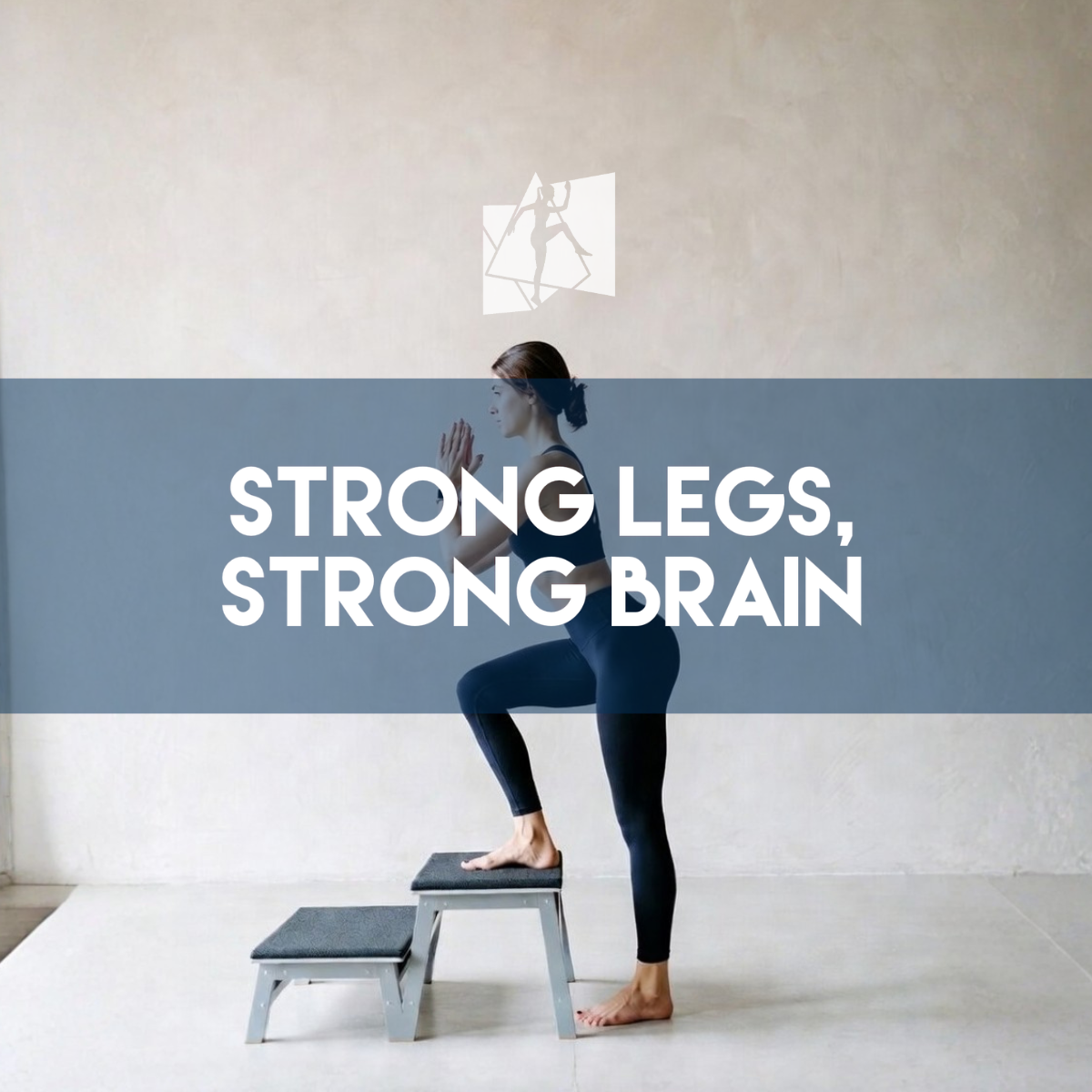
When people think about leg strength, they usually think about speed, power, or athletic performance. Emerging research suggests that muscle strength—especially in the legs—may play an important role in brain health too. [2,3,7]
The brain and body are deeply connected. Skeletal muscle doesn’t just move you; it behaves as a metabolic and signaling organ, sending information to the brain through blood flow, hormones, and other chemical messengers. [2]
Large observational studies in middle-aged and older adults show a pattern: people with greater muscle strength tend to have a lower risk of developing dementia and experience slower cognitive decline over time. Staying physically active and maintaining fitness are also linked with healthier brain structure and better cognitive performance as we age. [1,5,6]
One long-term twin study found that leg strength in midlife predicted better cognitive aging over a ten-year period, suggesting that maintaining lower-body strength may play a role in protecting brain function later in life. [7,3]
Why Leg Strength Matters
Leg muscles are among the largest muscle groups in the body. When they work—during walking, squatting, climbing stairs, or running—they trigger several physiological responses that may benefit the brain. [2]
Improved circulation
Exercise involving large muscle groups increases cardiovascular output and brain blood flow, helping deliver oxygen and nutrients and support vascular health, which is closely tied to cognitive function. [5,6]
Muscle-to-brain signaling
Active muscles release chemical messengers called myokines that can influence inflammation, metabolism, and neural function, and may help support neuron growth, synaptic plasticity, and brain repair. [2]
Cognitive and neurochemical benefits
Resistance training and regular physical activity have been associated with changes in brain chemistry and electrical activity related to memory and cognition, and with better cognitive performance in older adults. [4,6]
Translation:
Strong legs don’t just move you better. They may also help your brain stay healthier, especially as you age.
The Role of Resistance Training
Resistance training is one of the most efficient ways to build and maintain muscle strength, especially in the lower body. It can be done with bodyweight, free weights, machines, or resistance bands and can be scaled to almost any fitness level. [5]
Research in older adults and people with cognitive impairment suggests that resistance exercise can improve strength, functional capacity, and may offer modest cognitive benefits by improving blood flow, reducing inflammation, and promoting neurotrophic factors like BDNF. While it cannot guarantee prevention of dementia, it appears to be a promising strategy to support overall brain and body health across the lifespan. [1,2,3,4]
Translation:
Lifting isn’t just for performance or aesthetics anymore. It’s one of the most effective levers you can pull for long-term brain and body health.
Only Have 15 Minutes?
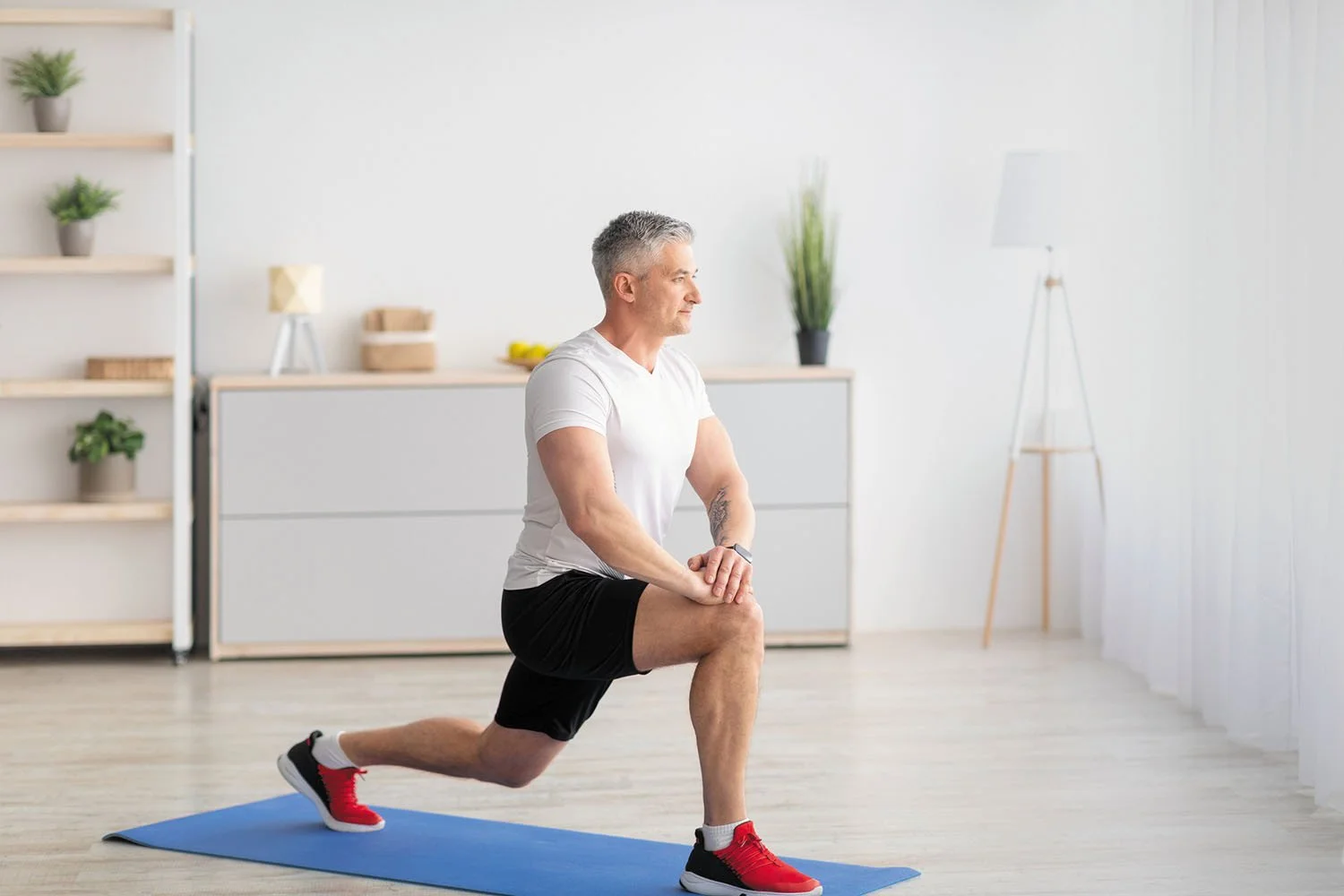
No gym. No equipment. No problem! Just 15–30 minutes and a bit of space. That’s enough to train your legs—and challenge your brain with coordination, balance, and effort.
Here are five leg exercises that will train both your body and your brain:
Squats
Targets quads, glutes, and core while reinforcing motor control and neutral alignment.
Step-ups
Single-leg strength and dynamic stability that carry over directly to stairs, running, and sport.
Lateral lunges
Trains side-to-side control, hip strength, and prepares for deceleration work — key for cutting and change of direction.
Glute bridges
Focuses on glutes and hamstrings, supporting hip extension and pelvic control.
Calf raises
Builds calf and ankle strength, helping with balance, walking, and running efficiency.
If you’re new to exercise, have pre-existing medical conditions, or are unsure where to start, check in with a healthcare or rehab professional before ramping up intensity.
The Bottom Line
Strong muscles support more than performance. Building and maintaining leg strength is critical for movement, mobility, and independence — and may also help support cognitive function and healthier brain aging over time.
The takeaway:
Train your legs now.
Load gradually.
Keep them strong across the lifespan.
Because you’re not just training for today’s workout. You may also be investing in how your brain works years from now.
References
1. Jin, W., Liu, S., Huang, L., Xiong, X., Chen, H., & Liang, Z. (2025). Association between muscle strength and dementia in middle-aged and older adults: A nationwide longitudinal study. Journal of psychiatric research, 191, 189–197. https://doi.org/10.1016/j.jpsychires.2025.09.043
2. Brisendine, M. H., & Drake, J. C. (2025). Integrative physiology of skeletal muscle for maintaining cognitive health. The Journal of physiology, 10.1113/JP286748. Advance online publication. https://doi.org/10.1113/JP286748
3. Vaughan, B. A., Muniz-Terrera, G., Simon, J. E., Grooms, D. R., Clark, B. C., Davatzikos, C., Erus, G., Tian, Q., Ferrucci, L., Resnick, S. M., & Simonsick, E. M. (2025). The predictive power of brain-predicted age and leg strength on mobility decline in aging: findings from the Baltimore Longitudinal Study of Aging. The journals of gerontology. Series A, Biological sciences and medical sciences, 80(12), glaf222. https://doi.org/10.1093/gerona/glaf222
4. Song, Y., Jia, S., Wang, X., Wang, A., Li, S., Ding, F., Ma, T., & Wu, X. (2025). Muscle strength, EEG biomarkers, and working memory as interacting predictors of cognitive function in cognitively impaired older adults. Frontiers in aging neuroscience, 17, 1641209. https://doi.org/10.3389/fnagi.2025.1641209
5. Chen, C., & Nakagawa, S. (2023). Physical activity for cognitive health promotion: An overview of the underlying neurobiological mechanisms. Ageing research reviews, 86, 101868. https://doi.org/10.1016/j.arr.2023.101868
6. Tari, A. R., Walker, T. L., Huuha, A. M., Sando, S. B., & Wisloff, U. (2025). Neuroprotective mechanisms of exercise and the importance of fitness for healthy brain ageing. Lancet (London, England), 405(10484), 1093–1118. https://doi.org/10.1016/S0140-6736(25)00184-9
7. Steves, C. J., Mehta, M. M., Jackson, S. H., & Spector, T. D. (2016). Kicking Back Cognitive Ageing: Leg Power Predicts Cognitive Ageing after Ten Years in Older Female Twins. Gerontology, 62(2), 138–149. https://doi.org/10.1159/000441029