
Physical TheraPT

Clinic & Education

Peptides Aren't One Thing

We get asked about peptides almost daily: What are they? What do they do? Should I take them? They've grown in popularity recently, but peptides have been part of patient care for over 100 years, and there's still a lot to learn about where they help most.
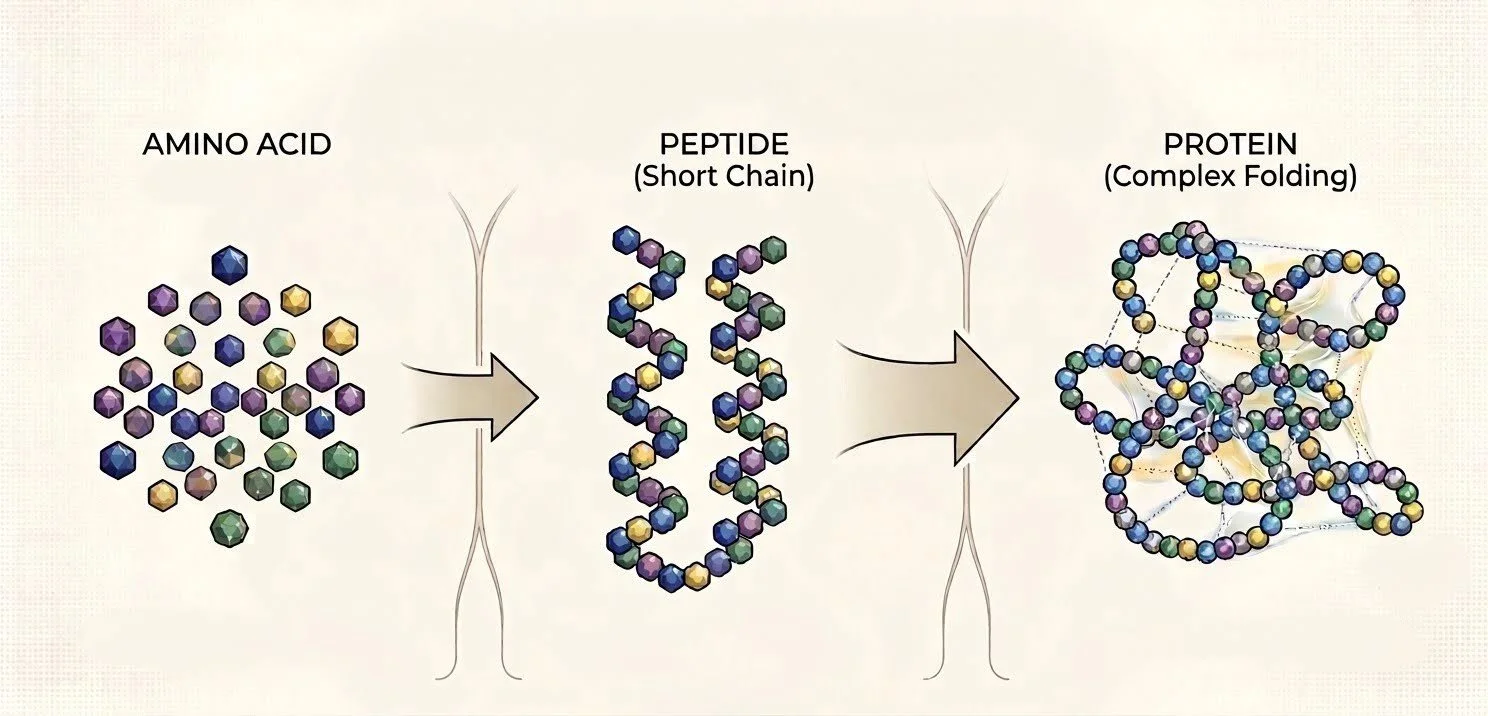


WHAT IS A PEPTIDE?

1. A short chain of amino acids. Amino acids are the building blocks of life. A protein is simply a much larger chain that folds into a 3D structure.

2. Your body already makes them. Peptides occur naturally, and your body creates and uses them every day.

3. Their main job is messaging. Peptides signal processes in the body to speed up or slow down.

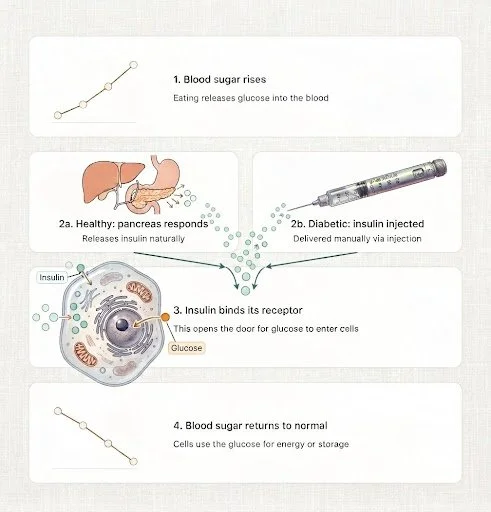
→ Insulin is a good example. After we eat, our bodies need a signal to start absorbing glucose. A healthy pancreas sends out insulin, a peptide, to tell cells to take it in. When the pancreas isn’t working properly, we can inject insulin instead. It’s the oldest peptide in medicine and starts the same process.
 

Peptides Have Been in Medicine for Decades

  • Insulin: managing diabetes since 1920

  • Oxytocin: helping induce labor since the early 1900s

  • GLP-1: managing diabetes and weight, with growing research for other uses since 2005

Collagen peptides are the exception. Unlike the others, this one is a supplement and has no FDA approval. However, there are significant studies and meta-analyses suggesting collagen can help with bone density and skin hydration (9, 11).


FDA Medication vs. Supplement

If you are interested in taking a peptide, this is possibly the biggest distinction to consider. Are you taking a medication or a supplement?

Medication

Insulin, Oxytocin, GLP-1, etc.

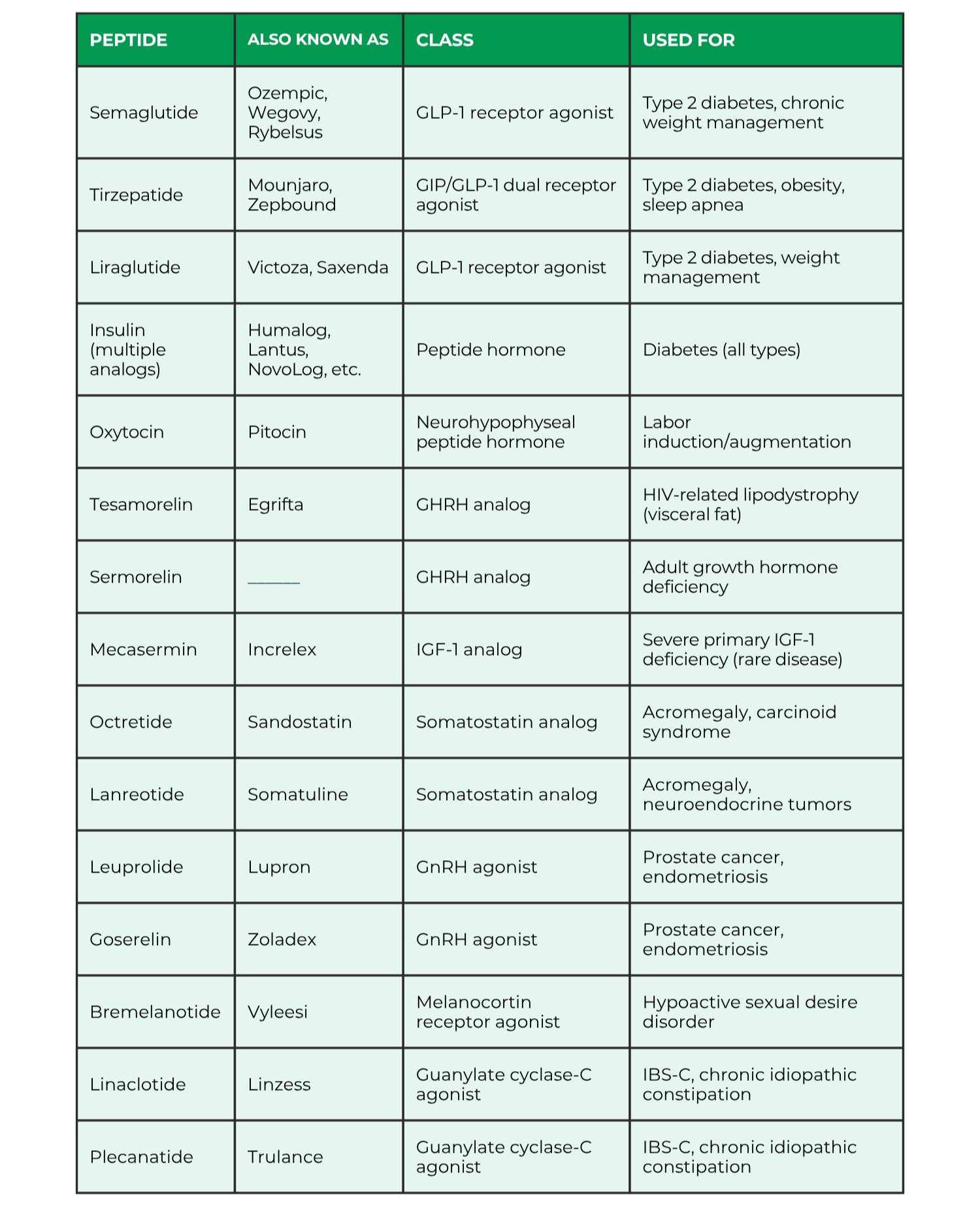
In the US, these peptides have gone through the regulatory pathways to earn FDA approval. This includes a series of randomized controlled trials to establish safety and efficacy. They are manufactured under strict quality standards and are continuously monitored for as long as they are on the market.

Supplement

Collagen, Whey Protein Hydrolysates, Carnosine

The number of supplements on the market is never-ending, and many peptides fall into this category. The FDA considers supplements “food,” so they do not need pre-market approval to demonstrate safety, efficacy, or whether they contain what they say they contain. That doesn’t mean they are all bad. It means you need to do your research before taking any supplement.

You can also look for third-party organizations like USP, NSF, and BCOG that test supplements and provide a stamp of approval.

The Third Category: The Gray area

BPC-157, TB-500, etc.

Some substances are not cleared by the FDA but have been determined to carry more risk, so they cannot be deemed a supplement. Current examples are BPC-157 and TB-500, commonly referred to as the “Wolverine Stack.” Currently, there are not enough human trials to gain FDA approval.


WHERE DOES EACH PEPTIDE FALL?

If you are curious which peptides fall into the FDA-approved, supplement, and “other” categories, check out the tables below. They contain the most common peptides along with the most current research on each.

FDA APPROVED
 

SUPPLEMENTS
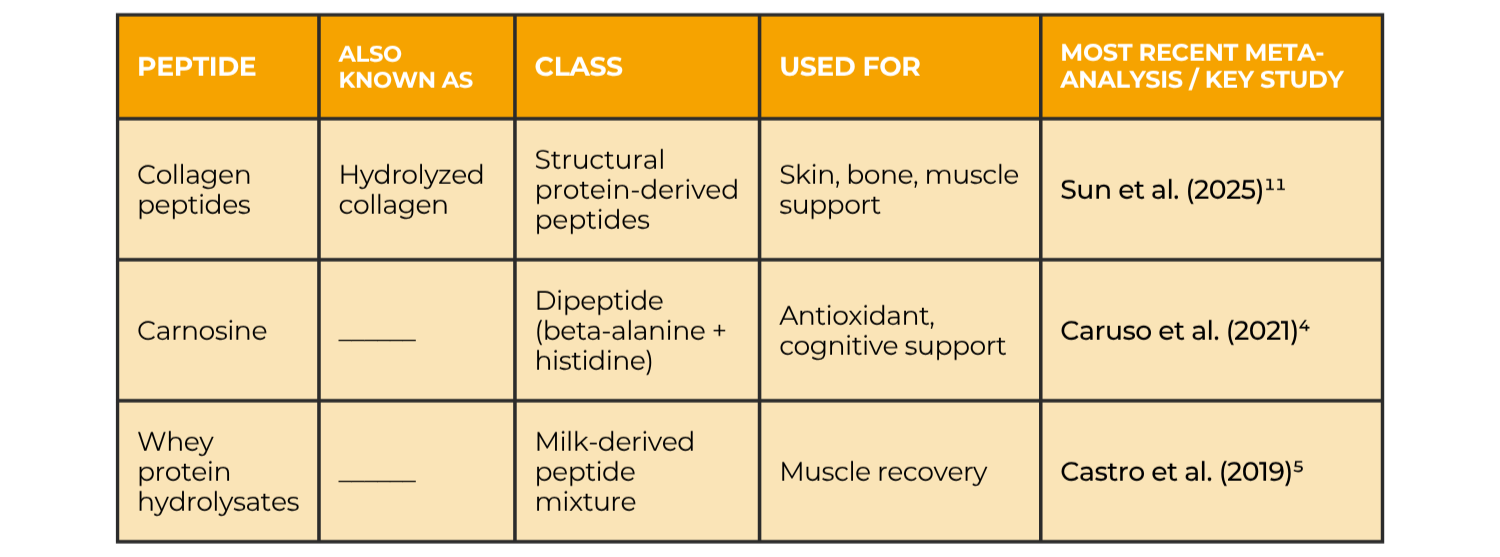
 

NOT FDA APPROVED
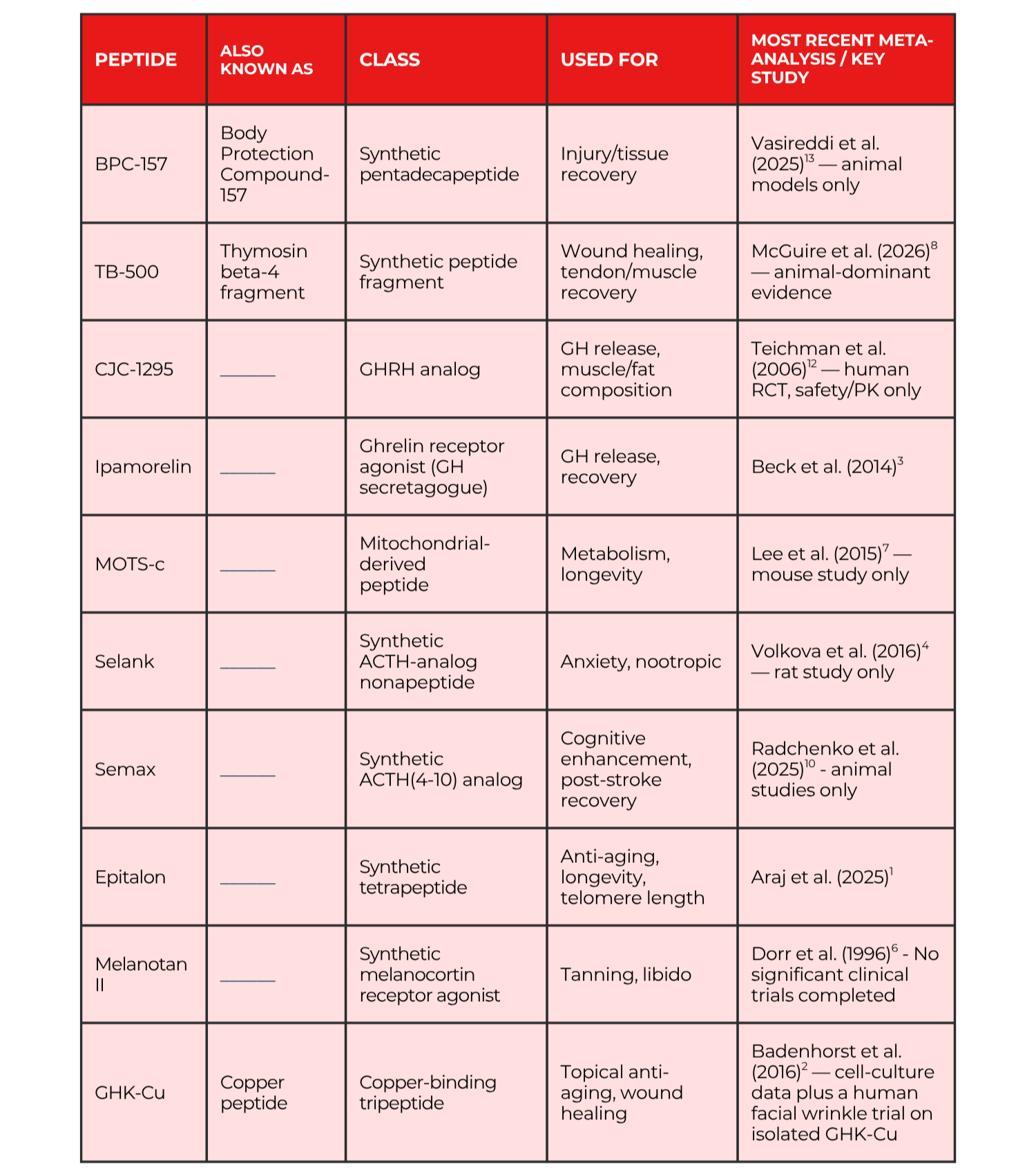
 

Competing in a Sport?

→ Check Global DRO before you start. Whether a peptide is FDA-approved, a supplement, or in the gray area, look it up on Global DRO (Global Drug Reference Online) to see if it's banned by the World Anti-Doping Agency.

New research is coming out every month and advice may change as new information is discovered. 


THE BOTTOM LINE

Peptides aren't one thing. They range from decades-proven medications to unregulated gray-area products. Know which category you're considering, check for anti-doping restrictions if you compete, and talk to your physician before starting anything.


Questions about peptides or your recovery plan?
Reach out to the Physical TheraPT team.


References

  1. Araj, S. K., Brzezik, J., Mądra-Gackowska, K., & Szeleszczuk, Ł. (2025). Overview of epitalon—Highly bioactive pineal tetrapeptide with promising properties. International Journal of Molecular Sciences, 26(6), 2691. https://pmc.ncbi.nlm.nih.gov/articles/PMC11943447/

  2. Badenhorst, T., Svirskis, D., Merrilees, M., Bolke, L., & Wu, Z. (2016). Effects of GHK-Cu on MMP and TIMP expression, collagen and elastin production, and facial wrinkle parameters. Journal of Aging Science, 4(3), 166. https://doi.org/10.4172/2329-8847.1000166

  3. Beck, D. E., Sweeney, W. B., McCarter, M. D., & Ipamorelin 201 Study Group. (2014). Prospective, randomized, controlled, proof-of-concept study of the ghrelin mimetic ipamorelin for the management of postoperative ileus in bowel resection patients. International Journal of Colorectal Disease, 29(12), 1527–1534. https://pubmed.ncbi.nlm.nih.gov/25331030/

  4. Caruso, G., Godos, J., Castellano, S., Micek, A., Murabito, P., Galvano, F., Ferri, R., Grosso, G., & Caraci, F. (2021). The therapeutic potential of carnosine/anserine supplementation against cognitive decline: A systematic review with meta-analysis. Biomedicines, 9(3), 253. https://doi.org/10.3390/biomedicines9030253

  5. Castro, L. H. A., de Araújo, F. H. S., Olimpio, M. Y. M., Primo, R. B. de B., Pereira, T. T., Lopes, L. A. F., Trindade, E. B. S. de M., Fernandes, R., & Oesterreich, S. A. (2019). Comparative meta-analysis of the effect of concentrated, hydrolyzed, and isolated whey protein supplementation on body composition of physical activity practitioners. Nutrients, 11(9), 2047. https://pmc.ncbi.nlm.nih.gov/articles/PMC6769754/

  6. Dorr, R. T., Lines, R., Levine, N., Brooks, C., Xiang, L., Hruby, V. J., & Hadley, M. E. (1996). Evaluation of melanotan-II, a superpotent cyclic melanotropic peptide in a pilot phase-I clinical study. Life Sciences, 58(20), 1777–1784. https://pubmed.ncbi.nlm.nih.gov/8637402/

  7. Lee, C., Zeng, J., Drew, B. G., Sallam, T., Martin-Montalvo, A., Wan, J., Kim, S.-J., Mehta, H., Hevener, A. L., de Cabo, R., & Cohen, P. (2015). The mitochondrial-derived peptide MOTS-c promotes metabolic homeostasis and reduces obesity and insulin resistance. Cell Metabolism, 21(3), 443–454. https://doi.org/10.1016/j.cmet.2015.02.009

  8. McGuire, F., Hughes, E., Maak, T., & Cushman, D. M. (2026). Thymosin beta-4 and TB-500 in tissue healing, regeneration, and musculoskeletal repair: A scoping review. Applied Sciences, 16(12), 6202. https://doi.org/10.3390/app16126202

  9. Pu, S.-Y., Huang, Y.-L., Pu, C.-M., Kang, Y.-N., Hoang, K. D., Chen, K.-H., & Chen, C. (2023). Effects of oral collagen for skin anti-aging: A systematic review and meta-analysis. Nutrients, 15(9), 2080. https://doi.org/10.3390/nu15092080

  10. Radchenko, A. I., Kuzubova, E. V., Apostol, A. A., Mitkevich, V. A., Andreeva, L. A., Limborskaya, S. A., Stepenko, Y. V., Shmigerova, V. S., Solin, A. V., Korokin, M. V., Pokrovskii, M. V., Myasoedov, N. F., & Makarov, A. A. (2025). The potential of the peptide drug Semax and its derivative for correcting pathological impairments in the animal model of Alzheimer's disease. Acta Naturae, 17(4), 110–120. https://pmc.ncbi.nlm.nih.gov/articles/PMC12755871/

  11. Sun, C., Yang, A., Teng, F., & Xia, Y. (2025). Efficacy of collagen peptide supplementation on bone and muscle health: A meta-analysis. Frontiers in Nutrition, 12, Article 1646090. https://doi.org/10.3389/fnut.2025.1646090

  12. Teichman, S. L., Neale, A., Lawrence, B., Gagnon, C., Castaigne, J. P., & Frohman, L. A. (2006). Prolonged stimulation of growth hormone (GH) and insulin-like growth factor I secretion by CJC-1295, a long-acting analog of GH-releasing hormone, in healthy adults. The Journal of Clinical Endocrinology & Metabolism, 91(3), 799–805. https://doi.org/10.1210/jc.2005-1536

  13. Vasireddi, N., Hahamyan, H., Salata, M. J., Karns, M., Calcei, J. G., Voos, J. E., & Apostolakos, J. M. (2025). Emerging use of BPC-157 in orthopaedic sports medicine: A systematic review. HSS Journal. Advance online publication. https://pmc.ncbi.nlm.nih.gov/articles/PMC12313605/

  14. Volkova, A., Shadrina, M., Kolomin, T., Andreeva, L., Limborska, S., Myasoedov, N., & Slominsky, P. (2016). Selank administration affects the expression of some genes involved in GABAergic neurotransmission. Frontiers in Pharmacology, 7, Article 31. https://pmc.ncbi.nlm.nih.gov/articles/PMC4757669/

What is an Athletic Trainer?

While both are casually referred to as “trainers”, personal trainer and athletic trainers are two very different roles. Personal trainers generally work in gyms and health clubs, helping the general public improve their level of fitness; Athletic trainers are most often found at colleges, hospitals, clinics and with professional sporting or performance organizations, helping patients or athletes recuperate from injuries and safely continue to participate in sports and physically demanding professions. Below, we’ll dive into the two professions in greater detail:

Personal Trainers

Personal trainers evaluate a person’s fitness level and then design with an exercise program to improve the individual’s health, cardiovascular endurance and body composition. They teach clients how to perform exercises properly, while creating an atmosphere of accountability. Personal trainers with additional credentialing can also education clients on how to live a healthier lifestyle, coaching them on nutrition basics and recovery strategies.

While there is no governing body for personal training, it’s highly recommended to select a personal trainer who has completed a certification program; there are several institutions that offer certifications in personal training, including the American Council on Exercise (ACE) and the National Academy of Sports Medicine (NASM). However, some people may prefer to work with a coach who has learned personal experience in fitness such as a former athlete, rather than someone who has completed a certification program. In any arrangement, it is important to start smart-

  1. Check with your doctor before beginning a new fitness program

  2. Opt for simple movement patterns at low to moderate weights while you are still learning to limit your risk of injury

  3. Stay hydrated and take rest breaks as needed

  4. Stop exercising if you feel dizzy, lightheaded, nauseated, experience chest pain, or have an unexpectedly difficult time breathing

  5. Don’t do anything you’re not comfortable with

Athletic Trainers

Athletic trainers are clinicians who provide injury preventative services, emergency care, clinical diagnosis of injuries, therapeutic intervention and rehabilitation of both injuries and medical conditions. Athletic training is recognized by the American Medical Association (AMA), Health Resources Services Administration (HRSA) and the Department of Health and Human Services (HHS) as an allied health care profession. As a part of the healthcare system, athletic trainers work under the direction of a physician, and work collaboratively with physical therapists, massage therapists, and chiropractors. As part of an athletic department, they partner with the coaching and strength and conditioning staff, as well as nutrition and sport psychology teams to promote the overall health of the athlete.

Athletic trainers undergo rigorous academic and clinical training, supervised by the Commission on Accreditation of Athletic Training Education (CAATE). The current minimum entry point into the profession of athletic training is at the master’s level. Upon completion of a CAATE-accredited athletic training education program, students become eligible for national certification by successfully completing the Board of Certification, Inc. (BOC) examination. Once certified, athletic trainers are required to complete several hours of continuing education every year in an effort to ensure all professions remain current on the latest recommendations within sports medicine.

Comprehensive Care

There’s not a lot of crossover between the two occupations. This isn’t to say the roles can’t go hand in hand. After working with an athletic trainer to rehabilitate a sprained ankle, for example, an athlete may choose to enlist the help of a personal trainer to return his strength and endurance to the levels they were before the injury.

Physical TheraPT is a multi-faceted clinic, centered on patient success. By placing the individual at the hub of the system, instead of siloing by speciality, we’re able to streamline a truly comprehensive recovery. Our athletes are able to seamlessly work with the professionals they need- physical therapists, athletic trainers, massage therapists, and strength coaches- all in one place. Our athletic trainer offers:

  • Urgent Injury Assessment: Streamline your recovery by seeing an athletic trainer first. With extensive orthopedic education, athletic trainers are able to quickly determine the severity of an injury, determine next-steps and make referrals to local physicians, and provide you with home care instructions

  • Rehab: Apply the same proven approaches used with elite athletes to your unique situation and goals. Our expertise includes post-operative rehab, as well as rehab for both chronic and acute injuries and conditions.

  • Return-to-Play Training: We offer evidence-based programs, utilizing technology like force plates, dynamometer testing, blood flow restriction training (BFR), biofeedback and motion analysis to formulate your plan. Following a comprehensive evaluation, we can problem-solve with you to optimize your movement potential.

  • Injury Prevention: By using similar tools as detailed above, we are able to assess athletes and individuals before an injury occurs. Underlying movement compensations and imbalances are often evident even in healthy athletes. By prescribing corrective exercise strategies, and customized strength and conditioning programming, these vulernabilities can be targeted.

To learn more, check out these resources:

  1. American Counsel on Exercise

  2. National Athletic Trainers’ Association

  3. National Academy of Sports Medicine

  4. CT.gov

Image Credit

Superbill Best Practices

OverPage-0 47.png

Choosing to work with a provider not covered by your insurance has advantages and disadvantages. It can be gratifying to do your research and select the practice that best meets your needs, and in some ways, simplified to know exactly what you owe from the start. However, paying the full amount for services can add up.

Every patient is eligible to receive itemized medical receipts, or superbills, detailing their care with us. These receipts can be submitted to most insurance plans for reimbursement consideration, as well as qualify for select employee wellness incentives or tax credits. Because reimbursement costs the insurance companies money, the process is often tedious. We’ve put together our top four suggestions on how to maximize your returns, taking full advantage of your plan:


1. Gather your paperwork

Most insurance companies still require you fill out a paper application with your plan information to mail in along with your superbill. We recommend printing and filling out one application, leaving the date blank. Make copies of this, and reuse for each submission adding the individual dates each time. 

2. Read the fine print

Double check which payment options you select for your reimbursement. Some forms offer the choice to make payments to the providing clinician instead of the patient, aka YOU. Selecting the wrong option could require you to wait much longer to receive payment. 

3. Increase your odds

Submit your receipts individually, as soon as you receive them. It's a 6 week process, at minimum, and your insurance could require more information from your clinician.Having to resubmit decreases your chance of payment.

4. Pay it forward

Share any feedback from your insurance company with our team. Remember, they are looking for any reason to not pay out on claims. If they don't cover the services billed, we can work with you to better understand what they will cover in the future


Shannon+Vigil.jpg
 

As the Director of Operations + Patient Success, Shannon navigates our Out-of-Network team. After pairing you with the best provider for your goals, she continues to be an essential part of your care by ensuring you have all the information you need for insurance claims.

For specific questions, or for help managing an existing claim, schedule a call

 
Summary Block
This block has no content yet. Items you add to the page connected to this block will display here.

Maximizing Your Recovery

Tim Grover, the fitness specialist used by Michael Jordan and many elite NBA players, shares his philosophy in Relentless. He is describing the three things he asks of every player: "I don't care how much you can lift, how fast you can run, how many pull-ups you can do, or whether you can hit a three while blindfolded. There are only three things I ask of every client... Show up, work hard, and listen. That's it. It requires no talent, no special genetics, or any skill whatsoever to show up, work hard, and listen.”