
We get asked about peptides almost daily: What are they? What do they do? Should I take them? They've grown in popularity recently, but peptides have been part of patient care for over 100 years, and there's still a lot to learn about where they help most.
WHAT IS A PEPTIDE?
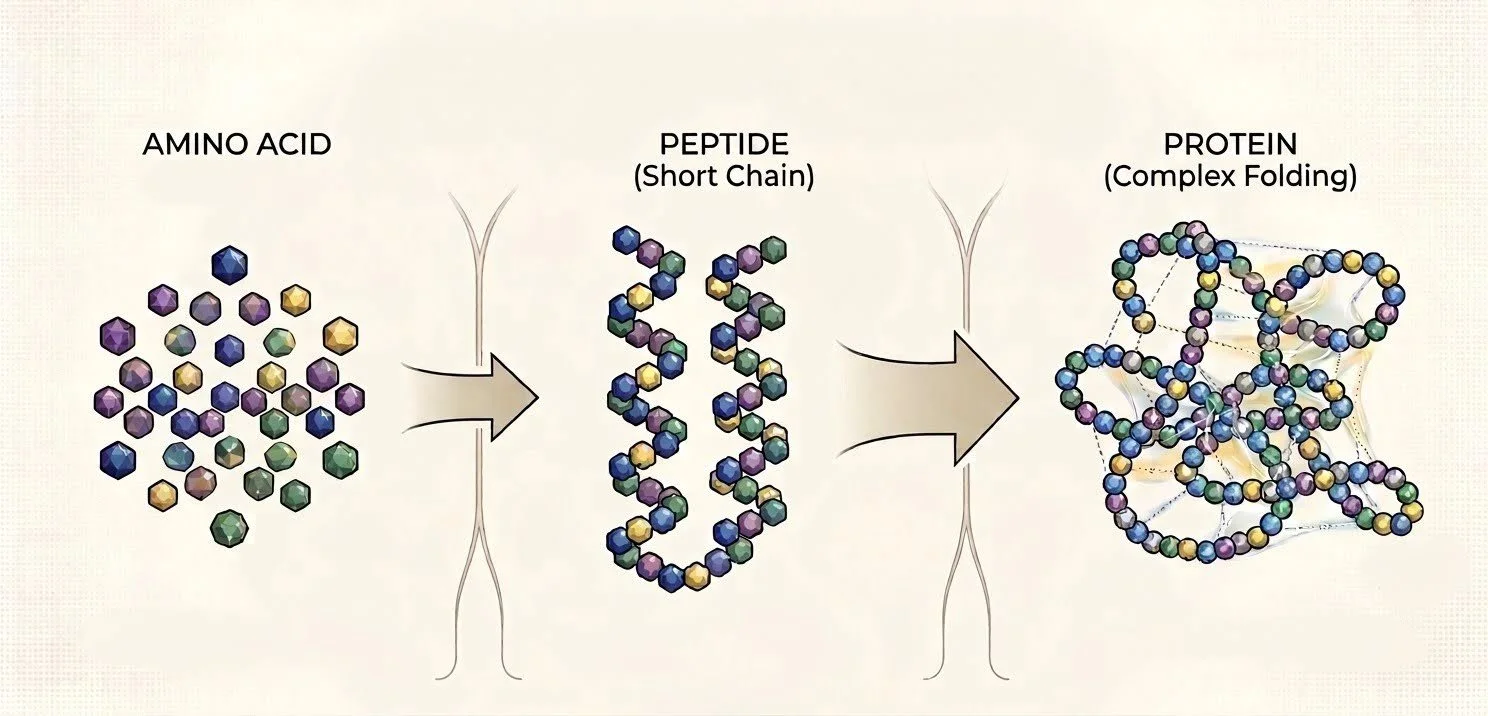
1. A short chain of amino acids. Amino acids are the building blocks of life. A protein is simply a much larger chain that folds into a 3D structure.
2. Your body already makes them. Peptides occur naturally, and your body creates and uses them every day.
3. Their main job is messaging. Peptides signal processes in the body to speed up or slow down.
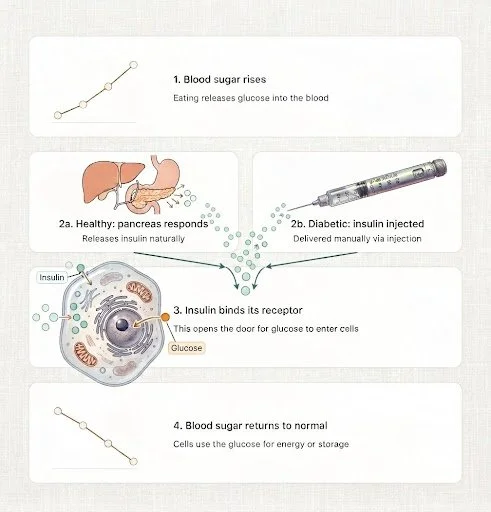
→ Insulin is a good example. After we eat, our bodies need a signal to start absorbing glucose. A healthy pancreas sends out insulin, a peptide, to tell cells to take it in. When the pancreas isn’t working properly, we can inject insulin instead. It’s the oldest peptide in medicine and starts the same process.
Peptides Have Been in Medicine for Decades
Insulin: managing diabetes since 1920
Oxytocin: helping induce labor since the early 1900s
GLP-1: managing diabetes and weight, with growing research for other uses since 2005
Collagen peptides are the exception. Unlike the others, this one is a supplement and has no FDA approval. However, there are significant studies and meta-analyses suggesting collagen can help with bone density and skin hydration (9, 11).
FDA Medication vs. Supplement
If you are interested in taking a peptide, this is possibly the biggest distinction to consider. Are you taking a medication or a supplement?
Medication
Insulin, Oxytocin, GLP-1, etc.
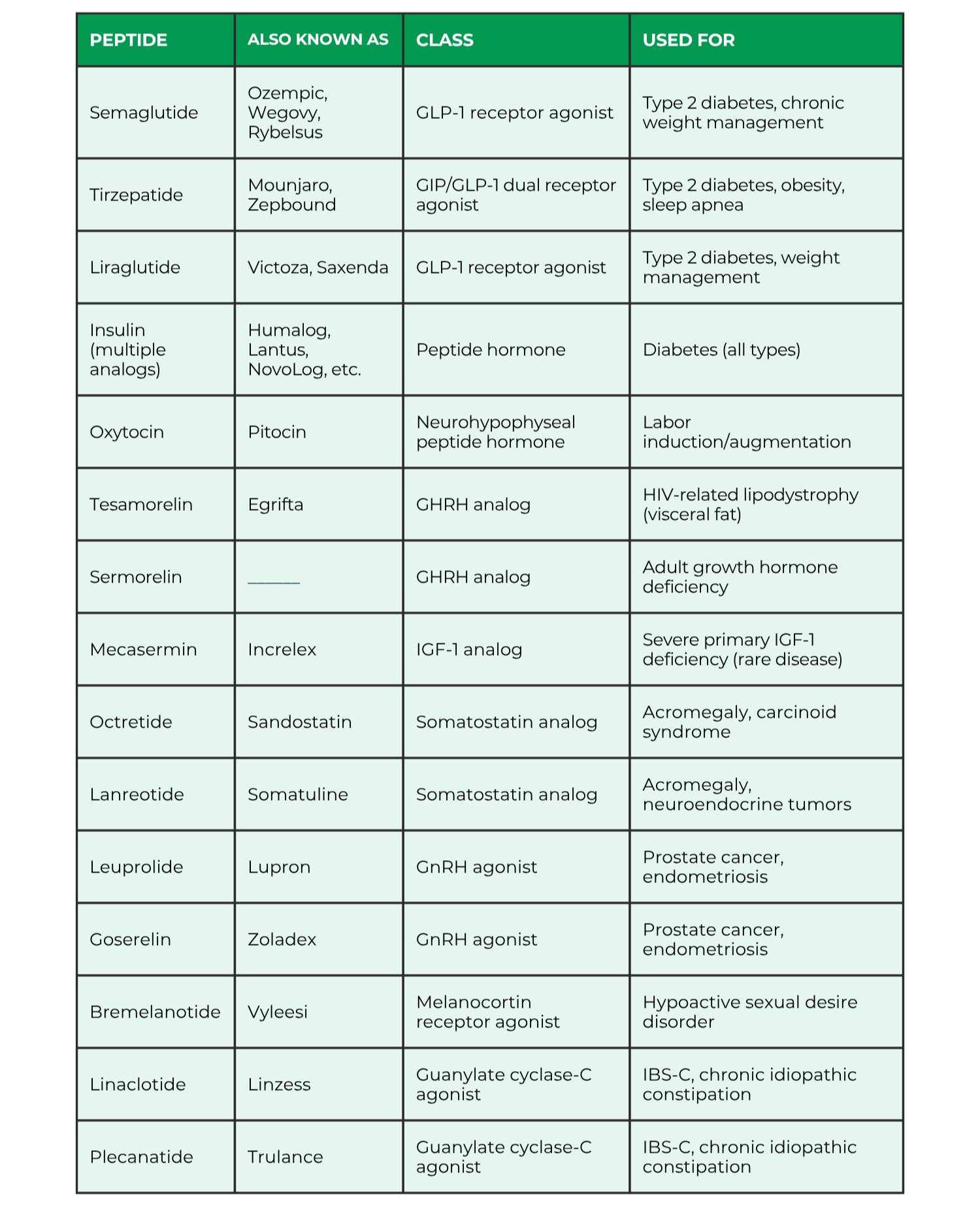
In the US, these peptides have gone through the regulatory pathways to earn FDA approval. This includes a series of randomized controlled trials to establish safety and efficacy. They are manufactured under strict quality standards and are continuously monitored for as long as they are on the market.
Supplement
Collagen, Whey Protein Hydrolysates, Carnosine
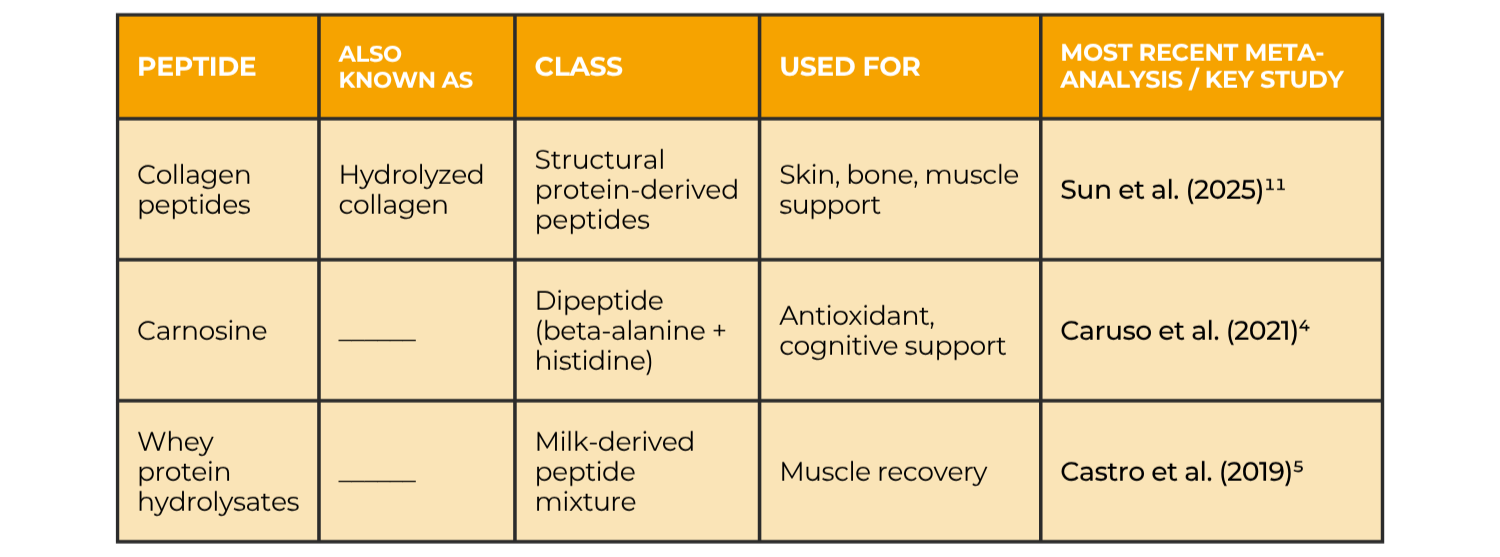
The number of supplements on the market is never-ending, and many peptides fall into this category. The FDA considers supplements “food,” so they do not need pre-market approval to demonstrate safety, efficacy, or whether they contain what they say they contain. That doesn’t mean they are all bad. It means you need to do your research before taking any supplement.
You can also look for third-party organizations like USP, NSF, and BCOG that test supplements and provide a stamp of approval.
The Third Category: The Gray area
BPC-157, TB-500, etc.
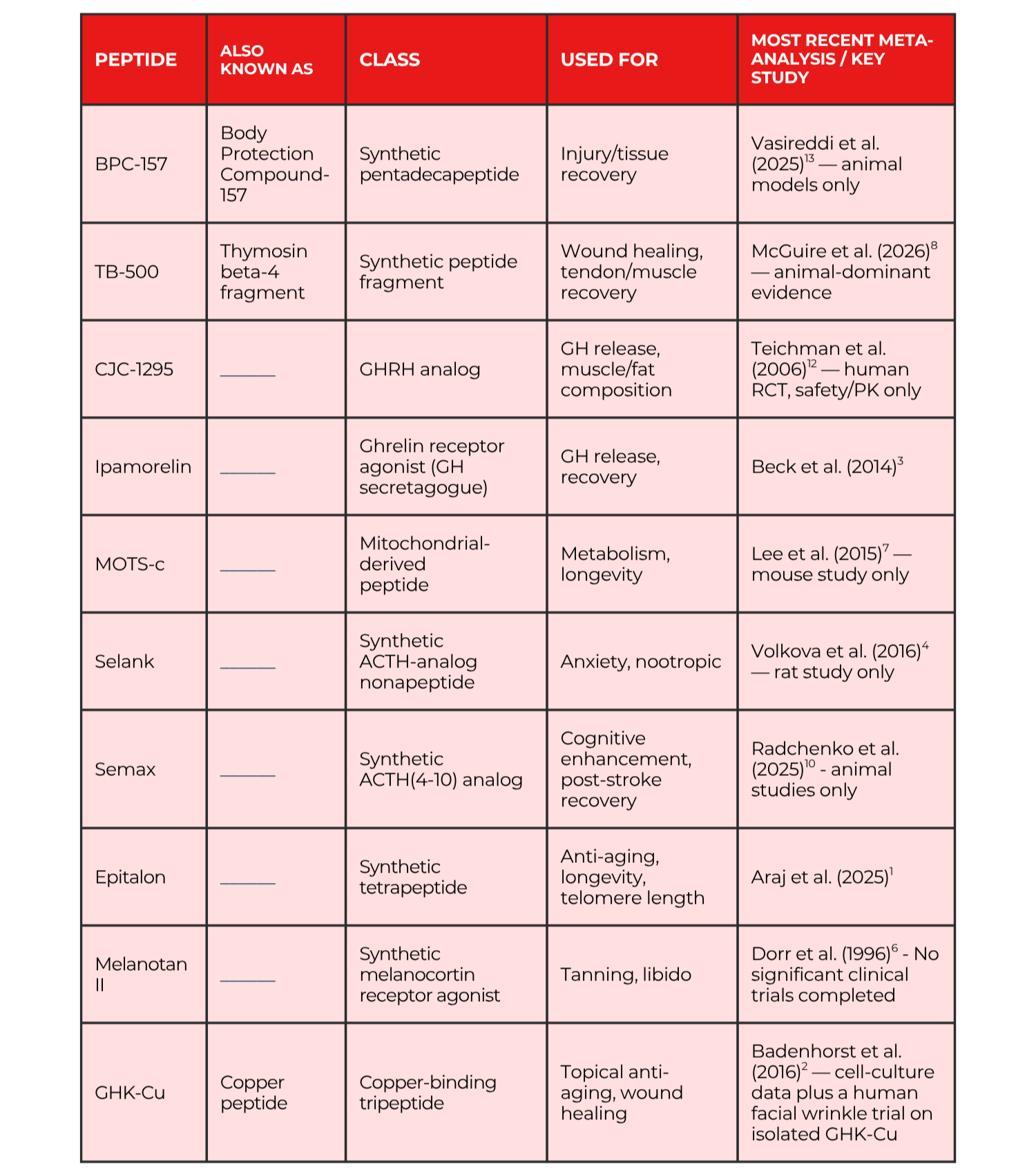
Some substances are not cleared by the FDA but have been determined to carry more risk, so they cannot be deemed a supplement. Current examples are BPC-157 and TB-500, commonly referred to as the “Wolverine Stack.” Currently, there are not enough human trials to gain FDA approval.
WHERE DOES EACH PEPTIDE FALL?
If you are curious which peptides fall into the FDA-approved, supplement, and “other” categories, check out the tables below. They contain the most common peptides along with the most current research on each.
FDA APPROVED
SUPPLEMENTS
NOT FDA APPROVED
Competing in a Sport?
→ Check Global DRO before you start. Whether a peptide is FDA-approved, a supplement, or in the gray area, look it up on Global DRO (Global Drug Reference Online) to see if it's banned by the World Anti-Doping Agency.
New research is coming out every month and advice may change as new information is discovered.
THE BOTTOM LINE
Peptides aren't one thing. They range from decades-proven medications to unregulated gray-area products. Know which category you're considering, check for anti-doping restrictions if you compete, and talk to your physician before starting anything.
Questions about peptides or your recovery plan?
Reach out to the Physical TheraPT team.
References
Araj, S. K., Brzezik, J., Mądra-Gackowska, K., & Szeleszczuk, Ł. (2025). Overview of epitalon—Highly bioactive pineal tetrapeptide with promising properties. International Journal of Molecular Sciences, 26(6), 2691. https://pmc.ncbi.nlm.nih.gov/articles/PMC11943447/
Badenhorst, T., Svirskis, D., Merrilees, M., Bolke, L., & Wu, Z. (2016). Effects of GHK-Cu on MMP and TIMP expression, collagen and elastin production, and facial wrinkle parameters. Journal of Aging Science, 4(3), 166. https://doi.org/10.4172/2329-8847.1000166
Beck, D. E., Sweeney, W. B., McCarter, M. D., & Ipamorelin 201 Study Group. (2014). Prospective, randomized, controlled, proof-of-concept study of the ghrelin mimetic ipamorelin for the management of postoperative ileus in bowel resection patients. International Journal of Colorectal Disease, 29(12), 1527–1534. https://pubmed.ncbi.nlm.nih.gov/25331030/
Caruso, G., Godos, J., Castellano, S., Micek, A., Murabito, P., Galvano, F., Ferri, R., Grosso, G., & Caraci, F. (2021). The therapeutic potential of carnosine/anserine supplementation against cognitive decline: A systematic review with meta-analysis. Biomedicines, 9(3), 253. https://doi.org/10.3390/biomedicines9030253
Castro, L. H. A., de Araújo, F. H. S., Olimpio, M. Y. M., Primo, R. B. de B., Pereira, T. T., Lopes, L. A. F., Trindade, E. B. S. de M., Fernandes, R., & Oesterreich, S. A. (2019). Comparative meta-analysis of the effect of concentrated, hydrolyzed, and isolated whey protein supplementation on body composition of physical activity practitioners. Nutrients, 11(9), 2047. https://pmc.ncbi.nlm.nih.gov/articles/PMC6769754/
Dorr, R. T., Lines, R., Levine, N., Brooks, C., Xiang, L., Hruby, V. J., & Hadley, M. E. (1996). Evaluation of melanotan-II, a superpotent cyclic melanotropic peptide in a pilot phase-I clinical study. Life Sciences, 58(20), 1777–1784. https://pubmed.ncbi.nlm.nih.gov/8637402/
Lee, C., Zeng, J., Drew, B. G., Sallam, T., Martin-Montalvo, A., Wan, J., Kim, S.-J., Mehta, H., Hevener, A. L., de Cabo, R., & Cohen, P. (2015). The mitochondrial-derived peptide MOTS-c promotes metabolic homeostasis and reduces obesity and insulin resistance. Cell Metabolism, 21(3), 443–454. https://doi.org/10.1016/j.cmet.2015.02.009
McGuire, F., Hughes, E., Maak, T., & Cushman, D. M. (2026). Thymosin beta-4 and TB-500 in tissue healing, regeneration, and musculoskeletal repair: A scoping review. Applied Sciences, 16(12), 6202. https://doi.org/10.3390/app16126202
Pu, S.-Y., Huang, Y.-L., Pu, C.-M., Kang, Y.-N., Hoang, K. D., Chen, K.-H., & Chen, C. (2023). Effects of oral collagen for skin anti-aging: A systematic review and meta-analysis. Nutrients, 15(9), 2080. https://doi.org/10.3390/nu15092080
Radchenko, A. I., Kuzubova, E. V., Apostol, A. A., Mitkevich, V. A., Andreeva, L. A., Limborskaya, S. A., Stepenko, Y. V., Shmigerova, V. S., Solin, A. V., Korokin, M. V., Pokrovskii, M. V., Myasoedov, N. F., & Makarov, A. A. (2025). The potential of the peptide drug Semax and its derivative for correcting pathological impairments in the animal model of Alzheimer's disease. Acta Naturae, 17(4), 110–120. https://pmc.ncbi.nlm.nih.gov/articles/PMC12755871/
Sun, C., Yang, A., Teng, F., & Xia, Y. (2025). Efficacy of collagen peptide supplementation on bone and muscle health: A meta-analysis. Frontiers in Nutrition, 12, Article 1646090. https://doi.org/10.3389/fnut.2025.1646090
Teichman, S. L., Neale, A., Lawrence, B., Gagnon, C., Castaigne, J. P., & Frohman, L. A. (2006). Prolonged stimulation of growth hormone (GH) and insulin-like growth factor I secretion by CJC-1295, a long-acting analog of GH-releasing hormone, in healthy adults. The Journal of Clinical Endocrinology & Metabolism, 91(3), 799–805. https://doi.org/10.1210/jc.2005-1536
Vasireddi, N., Hahamyan, H., Salata, M. J., Karns, M., Calcei, J. G., Voos, J. E., & Apostolakos, J. M. (2025). Emerging use of BPC-157 in orthopaedic sports medicine: A systematic review. HSS Journal. Advance online publication. https://pmc.ncbi.nlm.nih.gov/articles/PMC12313605/
Volkova, A., Shadrina, M., Kolomin, T., Andreeva, L., Limborska, S., Myasoedov, N., & Slominsky, P. (2016). Selank administration affects the expression of some genes involved in GABAergic neurotransmission. Frontiers in Pharmacology, 7, Article 31. https://pmc.ncbi.nlm.nih.gov/articles/PMC4757669/