
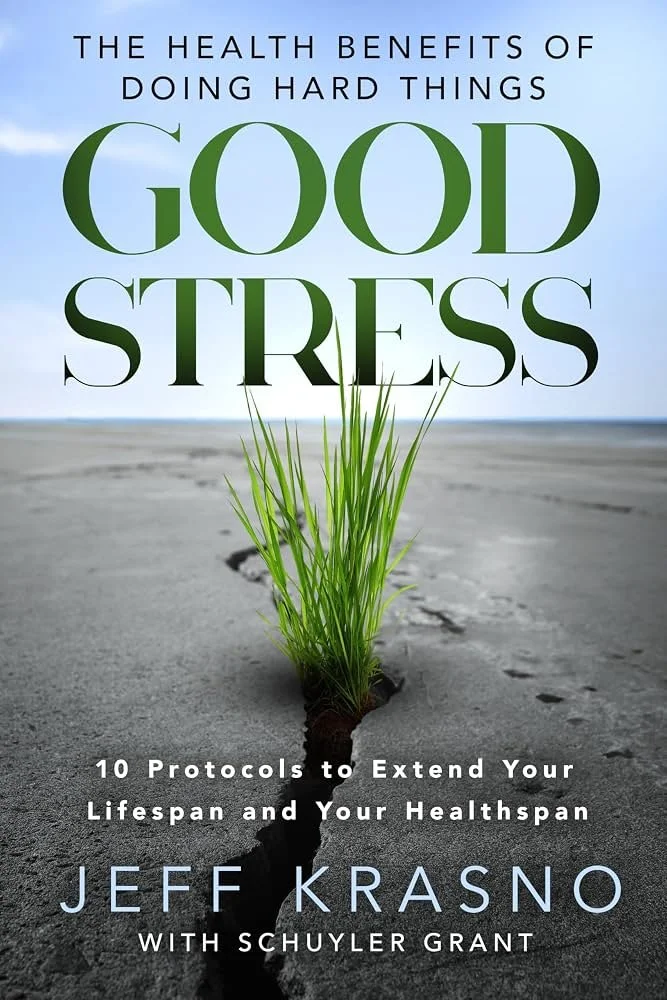
Current wellness culture emphasizes reduction — less stress, less pressure, more rest. In Good Stress, however, Jeff Krasno argues that this approach has been taken too far, and that the consequences are significant. Krasno, who built a career around health and wellness, was startled to receive a diabetes diagnosis in his forties. This experience prompted a broader realization: modern life has become too convenient and comfortable — constant access to food, regulated temperatures, near-continuous screen exposure — that the body is rarely challenged. According to Krasno, this absence of challenge is, paradoxically, more detrimental to long-term health than stress itself.
Together with his wife, Schuyler Grant, Krasno outlines accessible practices grounded in the premise that deliberate, moderate hardship can restore the body's resilience and strength. These practices include time-restricted eating, intentional exposure to heat and cold, time spent outdoors, and regular physical movement. By seeking out friction rather than avoiding it, individuals develop a form of resilience that extends to physical health, interpersonal relationships, and the demanding moments life inevitably presents. The principles in Good Stress reinforce a cornerstone of rehabilitation and performance: appropriately dosed stress is what drives adaptation, resilience, and long-term health.