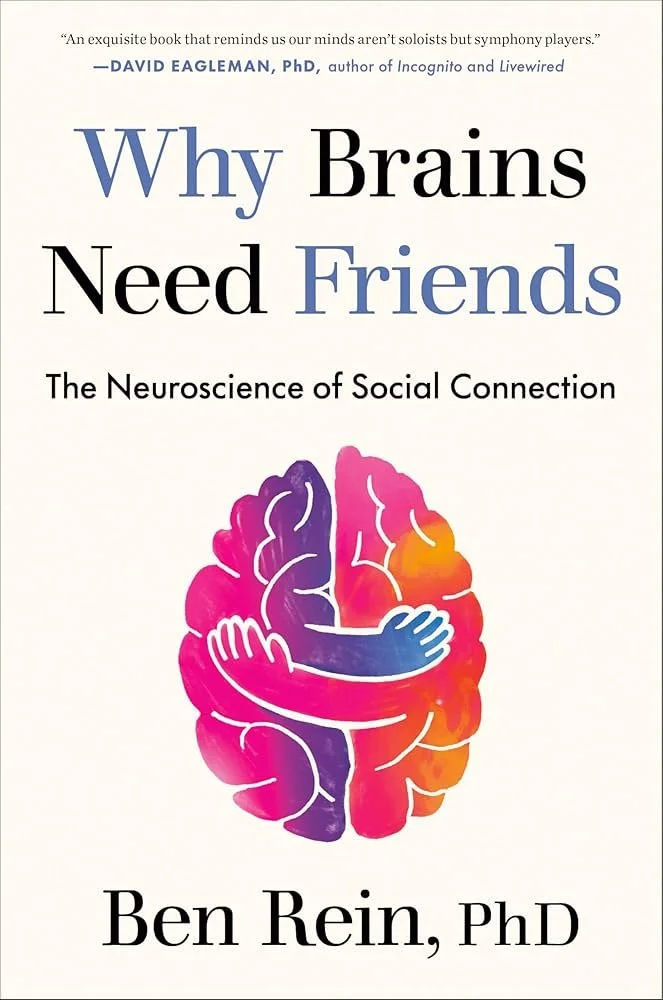
Human connection isn't just emotionally nourishing—it's biologically essential, wired directly into how our brains function and heal. In Why Brains Need Friends, neuroscientist Ben Rein makes the case that social interaction is a fundamental driver of brain health, not a pleasant extra. Rein explains how the brain processes connection differently depending on context—why a phone call lands differently than a text, why in-person presence matters, and why isolation registers in the body as a genuine threat to health, on par with other major health risks.
Drawing on neuroscience and psychology, the book unpacks the mechanisms behind bonding and connection, framing socializing not as a soft lifestyle preference but as a measurable input to physical and mental well-being—part of a "social diet" that supports a longer, healthier life.
That same wiring shows up constantly in our clinic. Patients training with a partner, a group class, or even a standing check-in tend to stick with their programs longer and push through plateaus that stall solo exercisers. It's not just willpower—shared effort registers differently in the brain than solitary effort, and having someone else in the loop changes how sustainable a goal feels. Whether it's a running group, a training partner, or just texting a friend your workout wins, building social connection into your training plan isn't a nice-to-have—it's a legitimate strategy for staying consistent and making the work feel less like a chore.